
NN#9: Organizing for Power
In NN#9, we welcome Steve McBee, founder of AMPED, “the political and cultural infrastructure the clean energy industry never built.” We discuss how the clean energy industry needs to organize to do battle with the fossil fuel industry and win on every level—from popular opinion to federal policy.
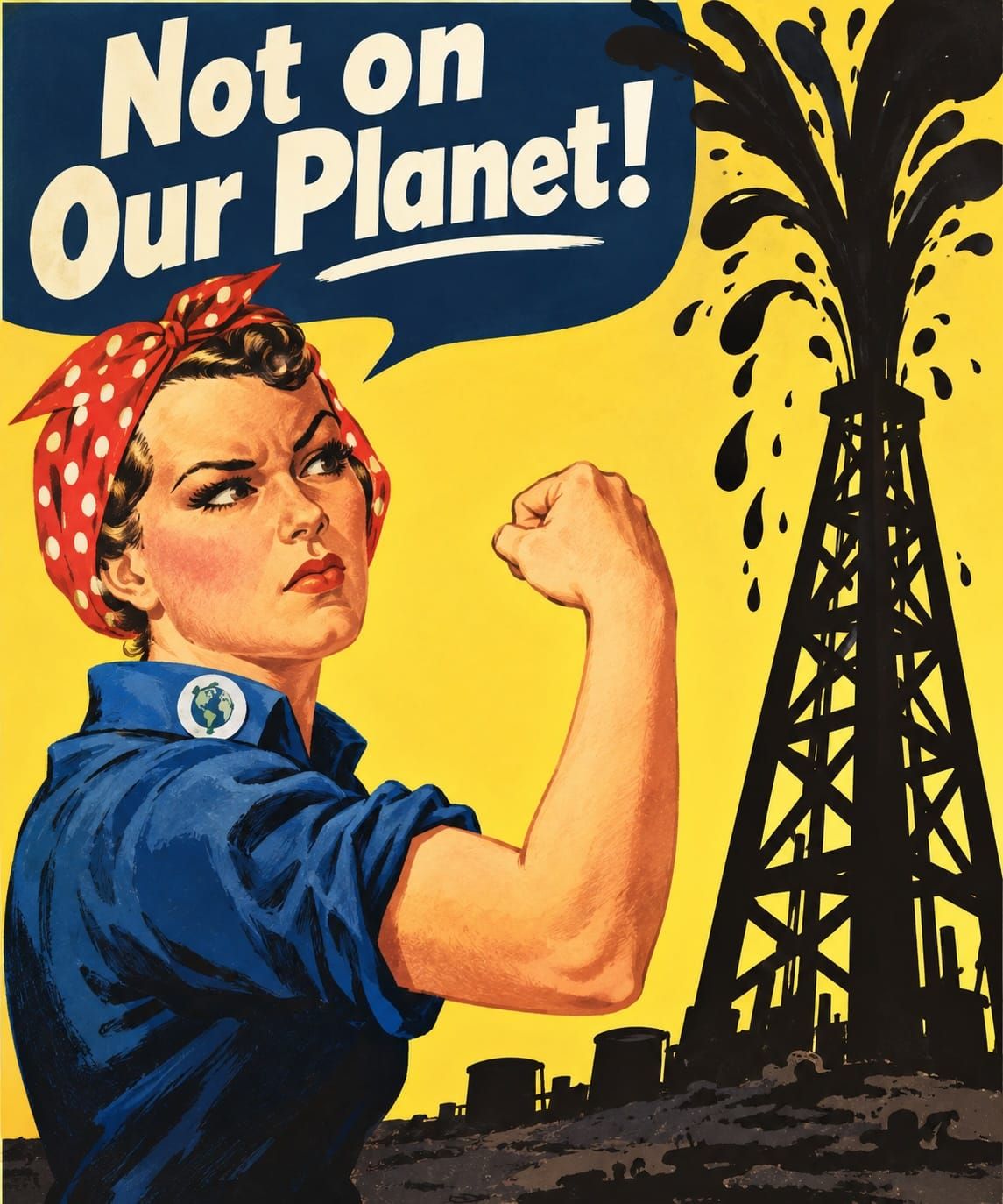
For the past several years, I’ve been becoming increasingly concerned and dismayed at the lack of media coverage of the incredible progress on the energy transition—especially outside the US, since the second Trump term began—and conversely, at how much the fossil fuel and nuclear industries utterly dominate the media coverage of energy in general.
I’ve been equally concerned at how little traction the winners of the energy transition have had in getting favorable policies enacted, and how successful the fossil fuel and nuclear industries have been in advancing policies favorable to them.
So for the first couple months of 2026, I spent a considerable amount of effort studying the media coverage of climate and the rollback of policies designed to halt global warming. Why was this happening, especially now, when the solutions of the energy transition are more competitive and desirable than ever? Especially in light of the enormous disruption caused by America and Israel’s attack on Iran and the partial closure of the Strait of Hormuz, now into its seventh month, along with enormous damage to oil and gas facilities across the region.
I shared some of my thoughts on that previously, in Transition Times #1, #8 and #12, and Nelder Notes #6. Most of my research on the subject has remained in my files, but the Transition Times and Nelder Notes publications were my answer to it. I have hoped to build Transition Times into a platform that elevates the excellent work that so many people are doing but that struggles to rise above the noise and get seen. And I have designed Nelder Notes to lean heavily into my opinions, and identify, in a persuasive and unflinching way, what’s real and important and what’s not, amid a sea of mere infomercials and incomprehensible (or irrelevant) science.
In the meantime, I have continued to study the media and policy landscapes and try to understand more clearly where the disconnects are. How is it possible that 89% of 130,000 people surveyed across 125 countries said their governments should do more to fight global warming, while so many of their elected officials are avoiding taking the actions that must be taken? How is it possible that 90% of Americans favored building more solar farms and 83% favored more wind in 2020, but those shares have dropped by around 25 points since then? Even as the world is on fire and suffering through the hottest year ever, with tens of thousands of deaths across Europe attributed to the heat?
So it was with great excitement when I became aware, a few months ago, of my guest in this episode, and what he is trying to do.
Steve McBee is a veteran energy strategist, energy company CEO, political consultant and lobbyist, energy transition investment fund founder, and more. His latest venture is called AMPED, which describes itself as “the political and cultural infrastructure the clean energy industry never built.” It’s an organization designed to address the very same deficiencies that I had been studying in my survey of the media and political landscape. And today we’re going to hear all about it, what it aims to do, and what Steve’s theory of change is for advancing the energy transition and winning the propaganda war we’ve been losing to the fossil fuel industry.
Transcript
Chris Nelder:
So let's hear what he has to say. Welcome Steve to the Nelder Notes Podcast.
Steve McBee:
Thank you. I'm glad be here.
Chris Nelder:
So, let's start with the problem as you see it. Then we can explore kind of your theory of change and and how that led you to create AMP and then we hear about its activities. Now, the way I've framed the problem is pretty simple. The global fossil fuel industry has had a century to rig every system in its favor and buy as much political support as they need. They also throw off massive amounts of cash which enables them to spend hundreds of millions of dollars a year, maybe billions depending on what you count or if it's global or whatever, employing an army of millions of highly skilled, highly paid media professionals to make sure that their point of view is represented on every major media platform every day all over the world.
Chris Nelder:
And against that army, the global energy transition industry puts up approximately fuck all, I think. So is that about it?
Steve McBee:
Is that a technical term?
Chris Nelder:
It is. Yes.
Steve McBee:
You know, that might be discounting it, or inflating it. Yeah. I mean, I think you have the problem. Right? I mean, we are being out hit.
Steve McBee:
We're being out hustled. And, you know, we're being outsmarted by the fossil fuel industry who takes very seriously their obligation to fight every day for their social license and build their political power so it's there when they need it. And they're one of the best industries on the planet in managing their interests there. And I think, Chris, my I've been a CEO, I've been an investor, I've been a board member, and then lots of different things in the clean energy industry over the past twelve years. I've seen lots of market cycles.
Steve McBee:
There have been good days and bad days and good years and bad ones. What I think right now is I'm more optimistic just based on what I'm seeing in the market, I'm more optimistic right now than I've ever been about the potential of the clean energy industry and the the the potential to decarbonize at the pace we need not only to build a great industry and create plenty of wealth in this industry, but to deal with the biggest risks of global climate change. Very optimistic. What is concerning to me is I think all of that commercial potential which we have worked so hard to create is really at risk because we have not worked nearly as hard in taking care of our noncommercial responsibilities. That includes our political power.
Steve McBee:
To your point, for one, we are obviously not organized for political power, particularly in Washington. And I think the limitations of our political infrastructure there have been pretty badly exposed over the past seventeen or eighteen months. Everything there needs to get rebooted in my opinion. Secondly, and I think adjacent to our political power is, you know, we as an industry for sure, and I would say also we as a climate movement do not do a good job of talking to the people who we most need to be with us. We do a great job of talking to each other but we're not landing the plane with the people that we need to be with us whether those are people that are in the commercial marketplace who's who we want to buy our products or whether those are voters that are standing there in the public square whose vote we wanna earn.
Steve McBee:
We tend to talk down to those people. We tend to talk over those people. We really don't meet them at a place that reflects their own lived experience and to me very concerning, maybe we'll get into this later in the show, is we're not talking to anybody in any kind of organized way in the places where they increasingly get their information in the digital and decentralized media spaces and we're not talking through voices in those spaces that they trust to deliver that information to them. And as you point out, like, the fossil fuel industry is is excellent at this. And as a result of their excellence, and sort of our neglect, we as an industry find ourselves outside the cultural zeitgeist.
Steve McBee:
And I think you and I have talked about this, Chris. I think we both see the world similarly today, which is the most important political signals really are cultural. And the most important market signals with increasing frequency are political and markets choose. And so I think this fantasy that we have had as an industry that we can just keep our heads down and build great products and build great companies and allocate capital in a smart and efficient way and just sort of shut the noise off in terms of all of the crazy that's happening in Washington, that is a fantasy, and that's not the way it works. You've got to be commercially excellent.
Steve McBee:
You have to be excellent at building and wielding your power politically, and you really have to be very intentional about being in the fight every day for narrative, for trust, for information flow, and ultimately for cultural legitimacy and your social license. I'm concerned that we have not invested in those things. I'm concerned that we're behind in not building the political infrastructure we need to protect and promote our commercial position, but equally doing these things is not rocket science. We can look across the table at our opponents. We know what good looks like.
Steve McBee:
We can get this stuff built if we're intentional about it. And if we get it built and we get ourselves organized, these markets are gonna transition themselves because the underlying fundamentals are so good. If we don't get ourselves organized, they'll still transition themselves, but it'll be lumpy all the way through and we'll be in a world of hurt in terms of climate change if we're not going fast enough. And so I'm very very focused on this. I think this is the number one most important thing for our industry.
Chris Nelder:
Yeah. I would absolutely agree with that. And there's a lot of dimensions to what that actually means. Right? What it takes to actually marshal public opinion and to earn the political capital that allows you to shape the rules, that allows you to shape the market.
Chris Nelder:
This is all one big bundle of things that has to happen together and has to have funding. One of the things that you point out in your blog post is that the oil and gas industry outspends environmental interest organizations and federal lobbying by about six to one. And between 2,008 and 2019, you point out that the API, the American Petroleum Institute, you know, the main lobbying organization for the fossil fuel industry in The US, spend more than $750,000,000 on public relations and advertising and communications. And compared to that, the Transition East Side spent what?
Steve McBee:
Not much.
Chris Nelder:
$2, think? Something like that?
Steve McBee:
Fuck all, I think was Yeah.
Chris Nelder:
Fuck all. So, mean, let's dig into the details here a little bit and and really identify what's missing and what we need to do to establish a level playing field essentially. Like, what's your diagnosis of the specific things that are missing on on the transition East Side?
Steve McBee:
Yeah. Let me maybe say a couple things and then answer that directly. So first of all, I think those numbers you know that you just articulated, you know, they they show a difference in mindset between the fossil fuel industry and the clean energy industry. And really, it's a difference in mindset between a mature industry and an industry that's still trying to figure it out. The fossil fuel industry as well as the tech industry and pharma and all all of these other industries that have built political and social infrastructure, they look at those as investments.
Steve McBee:
We tend to look at it as a cost. And they look at it as sort of the infrastructure that they have built almost like an operating system that enables and protects their commercial position. And they don't really distinguish between what they're doing commercially, what they're doing politically, what they're doing in the public square. I mean, they're all different things, but they do an excellent job of not just making investments in each of those three areas, but through organizations like the American Petroleum Institute, really bringing cohesion and harmonization between those three things. And so, you know, you always feel like you're in surround sound with the fossil fuel industry, and we don't think of it like that and we need to think of it like that.
Chris Nelder:
So so give us an example of exactly how the sausage is made. I mean, all all the pieces that you identified there, how do they work together to result in the market?
Steve McBee:
I mean, we take a defensive approach to our strategy. You know, we tend to engage when there's a crisis or when there's an opportunity. And, you know, what a mature industry does is, you know, they spend a lot of time in anticipation of either opportunities or crises that they know inevitably will come their way preparing for it, building support for it, generating information flows, doing persuasion, building relationships, building trust. And I think the IRA is a really good example of how we got it wrong. We realized too late we were in trouble.
Steve McBee:
We, you know, flew in a bunch of people to Washington to try to turn things around. We met with lots and lots of members of of Congress. Maybe they'd give us twenty minutes because a lot of times, you know, the members of Congress that we were meeting with had never met asking for the meeting.
Chris Nelder:
So there was no relationship there? There was no political capital?
Steve McBee:
No. In in so many cases, there isn't. You know? Or or or maybe that person who's asking for the meeting has flown in once a year and given an update to the congressional staff member about what they're doing and then they don't hear from them again. You know, it's a box check.
Steve McBee:
So all of a sudden you find yourself under tremendous pressure like we were, like the, you know, the Trump administration, very coordinated, very tenacious, very well organized and we very late realized that we were about to lose and so we sort of started trying to salvage the situation. And, you know, we we walk in to an office that doesn't know us or maybe has only met us once. My understanding is we almost always were pushed down to the staffer. And the staffer hasn't heard about this company or maybe is sort of familiar with it because they did a quick search before the meeting to make sure they understood what this company does, but they haven't felt them in their district. They haven't heard anything from their constituents, and they have heard a lot on the other side about all of the reasons to be against what we were trying to protect in the IRA.
Steve McBee:
And everybody was very polite and took it under consideration, but like we were never in the game, ever in the game in most of these meetings. So you could imagine if we were intentional about this, we have that same meeting, we come in with the same talking points, but maybe a couple of months before that in anticipation of this fight, we brought in some clean energy investors who managed together billions of dollars to really sit down with that member and help them understand how the provisions in the IRA unlock capital flows, how those capital flows are going into technologies and companies that get to America's security, get to our competitive position, get to meeting demand, get to doing things that matter in that member's district. And imagine also in anticipation of a big vote, like a vote to repeal the IRA, that every constituent in that member's district that had an interest in this, whether they were interested in it from an economic perspective, whether they were interested in it from a climate perspective, whether there were jobs, whether it was about energy prices and their utility bill, what if hundreds and hundreds of people had flooded that office with phone calls and letters ahead of the vote?
Steve McBee:
What if those companies who were flying in at the last minute had invested in communications on the ground in that district to drive voter perceptions about, their energy bills, the value of solar and clean energy, solar and battery on energy prices, or about jobs in their district or whatever it is. And the staffer sits down with a totally different level of familiarity, a totally different level of, like, positive pressure. And, you know, maybe they really start to consider whether they wanna vote against this bill. And, you know, they're like, I need three pieces of information to try to support you know, find a way for us to support the position you wanna take. And we have it back in that staffer's inbox in, like, an hour because we're ready.
Steve McBee:
I mean, my understanding was that, you know, like, during the IRA fight, I will just the reporter at the Washington Post will go unnamed, but this reporter who covers clean energy and who wanted to write about the impacts of the IRA in certain districts that were swingy on this vote, they couldn't get the trade associations to return their call, you know, for a day or two or three. And they're like, you know, if you call API they keep you on hold until they transfer you into the person you want to talk to. It's just dialed in.
Chris Nelder:
And then the person that you that they transfer you to has a sheet of talking points in front of them. They're they're ready to talk to
Steve McBee:
you. Totally on message, unified with a 100 other people that have the same set of talking points that are being passed through by the same person at American Petroleum Institute. I mean, it's really mean
Chris Nelder:
It's a whole machine.
Steve McBee:
Yeah. If you if it weren't so awful what they were doing, you know, you'd stand back, admire it, and, like, respect what they've achieved. Yeah. So yeah. But, you know, again, what they're doing is this is not like a Mars landing.
Steve McBee:
You know, this is organization, it's intention, it's discipline, and it's money, and it's deciding that it matters. They've decided it really matters. They decided that a long time ago and, you know, the amount of money they've spent versus the amount of value they've received in the form of regulatory advantages and tax incentives and all the rest, mean, it's not, you know, it's 12 to one or something. I mean, if it were an investment, you know, you'd retire.
Chris Nelder:
So let's let's take a very specific example here that just just happened. Looks like we're looks like we've lost the endangerment finding. Right? The the EPA has issued new rules now saying that they're they're no longer regulating carbon dioxide as a pollutant, as an air pollutant, which means that the authority to regulate that is is now gone. Now, this is something that the API, well, the whole fossil fuel industry has been trying to kill for for years.
Chris Nelder:
Well, since it since it actually got written into law. Right? That was what? 2,009, if I remember correctly?
Steve McBee:
Yeah. 2009. Right. Obama.
Chris Nelder:
Okay. So, seventeen years they've been trying to kill this thing. Right? And and what exactly do you think went into that campaign to kill it over the last seventeen years?
Steve McBee:
First of all, when I saw the New York Times yesterday morning, there were like three quotes from the administration, and or its allies setting up their position on cost and on on competitiveness. And all the way at the bottom, I can't remember which green group it was, but, you know, one of them, Sierra Club or NRDC or whatever, was given a quote and it was really all about the unfairness of it all and the the process obstruction and, you know, the legalities of it. We get back to, like, why is the fossil fuel so successful and how they communicate on things like the endangerment finding. They don't present facts, they present stories. They tell stories about how the endangerment finding is going to raise people's energy prices, about how it's going to slow us down in the race against China.
Steve McBee:
It's gonna make it harder, more expensive to manufacture in The US. It's gonna compromise our national security. I mean
Chris Nelder:
It's it's going to limit our amazing abundant future of energy. I I was listening yesterday to a recent interview that James Danley gave and he worked that word abundance in probably six times in a twelve minute interview. Right?
Steve McBee:
Yeah. Yeah. They keep it really simple and all those things, the inverse is true. It's all gaslighting, you know. But I mean they do it and you know they're they're very, you know, they're amazing liars.
Steve McBee:
They're very comfortable with sort of bending the truth into directions that benefit them. But they also, to your point, they get on message. They don't try to overcomplicate it. They find a message or two that really moves people and they just hammer it over and over and over again. And, you know, we we tend to be very one and done with our facts.
Steve McBee:
I think this is true not just in the climate space, but don't you think, you know, Chris, just like it's a problem across the whole progressive space is, you know, we just don't seem to have gotten the memo about how information travels, about how persuasion works, about how the algorithm is actioned in the media environment today. Like, we're really behind
Chris Nelder:
Or for that matter, you know, how the sausage is made. Right? Like, again, how many congressional meetings, even just with staffers, do you think the API took over the past seventeen years in an effort to kill the endangerment finding?
Steve McBee:
Yeah. And it's not just the staffers. I mean, they work them you know, like I I I was talking to a reporter a few months ago who covers energy for one of the big US media outlets, very influential reporter, who was telling me that the that the American Petroleum Institute has four salon dinners a year, one a quarter, where they invite all the Washington journalists covering energy into an off the record dinner. They bring in lots of lobbyists and other people from the industry, and they tell their story. And they present their case.
Steve McBee:
And, this reporter said, people don't love going to an American petroleum salon dinner, but you gotta go. I mean, it's part of your job. And the reporter said, no one from the clean energy industry has ever once, this person's been on this beat for thirteen years, never once has this reporter ever been asked to a comparable event for clean energy. So it's not just that they go in and see the staffers every week. They go to the staffers' boss' fundraisers.
Steve McBee:
They go and make themselves felt in the in the member of Congress' district. They're, you know, they're constantly running narrative campaigns in places that matter the most politically, but they're also working non elected stakeholders. They work the think tanks. They work the media. You know, they they work the whole system.
Chris Nelder:
See, I'm really glad you could lay this out because I think this is something that the average person just has no idea how this whole thing works. They they have no idea how the sausage is made. Right? I mean, you you could you could even be a news junkie and and carefully follow the headlines every single day and have no idea of this whole ground game that you just articulated there that that goes on in the background. Long before there's a headline.
Steve McBee:
Yeah. And I think we can get really frustrated. I mean, I've worked on Capitol Hill. I started my career on Capitol Hill. I spent ten years there.
Steve McBee:
And I didn't think about this when I was there, but I think about it now. When you're on Capitol Hill, you never ask for a meeting ever. Your whole schedule are meetings that get set up because someone asked to come in and talk to you. Same with the member of congress. So so, you know, whether those are people from your district, whether those are people from industry, whether those are people from not for profits, I mean, you are just in receive mode and you can't take all the meetings.
Steve McBee:
You know, the the members of congress take the highest value meetings, the staffers take the meetings that the members don't have time to take, and then a bunch of things, you know, fall out underneath that, that aren't viewed as worthy for either to take. And so it's a competition just to get in front of people for one. But two, when that's your life and you're just in receive mode then, you know, the information that you use to make policy calls or the way your perspective is shaped on the politics of a particular issue are almost a 100% driven by the people who come and give that information to you. So I think one of the really alarming things, you know, Chris, that I've seen I mean, I left Washington twelve years ago, I kind of really left and I've been very focused on investing in companies and building and scaling companies. You know, when I came back and started talking to members of Congress when I was thinking about whether or not to start AMPED, I mean I've been in Washington long enough to know that, you know, policy gets made all the time with insufficient information.
Steve McBee:
But the gap between what I see on the ground every day as an operator and how that's perceived by people on Capitol Hill, including members of Congress that are, like, relatively well informed and very much forced, there's this huge gap. You can't be mad, you can't ask people to be with you or be mad about the fact that people aren't with you if you haven't given them all the information. If you've given them all the information and they're not with you, that's a different thing. But we're not doing the first part. Is, you know, in building our political power, we're not crypto.
Steve McBee:
We don't have the collective balance sheet in the industry to go raise $2,200,000,000 to go buy our political power. So we have to compete asymmetrically with that. We have to, like, build our power based on our own individual strengths. The facts on the ground, the trends on the ground and what's happening with clean energy from the standpoint of price, speed to power, reliability, flexibility on the grid, those are they're great facts and they are weapons for us, but only if we weaponize them. And, you know, we're not doing our job of going in and giving people the facts, the commercial context, the commercial dynamic in a consistent way so that it's in the bloodstream when these, you know, when these policy calls get made.
Steve McBee:
We're not doing it. And so we have to be willing to tell our own story.
Chris Nelder:
So you lay out some really useful specific mileposts in your essays on your blog articulating what an effective clean energy industry would look like. And I think we've been kind of implying it, but I'd like to just lay it out more explicitly here. The first point being that it needs funding. Again, there's hundreds of millions of dollars being spent by the fossil fuel industry. In one of your articles, you mentioned that the entire energy and natural resources spent around $240,000,000 on federal lobbying in the first half of twenty twenty five alone.
Chris Nelder:
And clean energy's contribution to that was about 7%.
Steve McBee:
Yeah.
Chris Nelder:
And the oil and gas industry in just in terms of federal lobbying spent about $3,100,000,000 between 1998 and 2025 compared with about $487,000,000 spent by environmental interest groups. So that's a gap of more than six to one. Clearly, if you want to have an effective lobbying organization, being outspent six to one is not the way to go about it.
Steve McBee:
Being outspent six to one is gonna yield predictable result. We're never gonna be able to spend as much any at least anytime soon. Like, we we are a new industry. I mean, most of the players in this industry, whether they're companies or whether they're investment firms, are, you know, less than 20 years old. A lot of the best players are, like, less than 10 years old.
Chris Nelder:
Yeah. And and it's hard to beat an industry where you just suck a barrel of oil out of the ground and you get a $100 for it. Right? It's massively profitable industry.
Steve McBee:
It just generates a tremendous amount of cash flows for a relatively large number of people. And, you know, we're still we're working through business model. We're working through scaling. You know, you've got lots of venture capital or grow or private equity firms that have some really you know, that have a portfolio that on paper looks great, but, you know, liquidity has been hard to come by. The public markets
Chris Nelder:
Mhmm.
Steve McBee:
Have been very uneven in terms of being open, you know, for clean energy exits.
Chris Nelder:
Mhmm.
Steve McBee:
M and A has been slow. So you have a lot of balance sheet on paper. You have a lot less actual cash flows and revenue that you can use to make investments like this. So I think, it's unrealistic for us to say we're gonna match dollar for dollar what the fossil fuel industry is spending. We can't.
Steve McBee:
But and it's gotta be more it's gotta be more than 7%. It's gotta be better than, you know, six to one. But it doesn't you know, if it's three to one, we're gonna win. We have a much easier case to make. We have the facts on our side.
Steve McBee:
We have the trends on our side. We have I mean, one of the reasons the fossil fuel spends a lot of money is they know that they are losing. They might be not they might not be losing at this minute, but any trajectory shows you this is a industry in decline, assets in decline, And, you know, their job is to stretch it out for as long as they possibly can. They're gonna do whatever it takes, spend whatever it takes, say whatever it takes to burn the last possible molecule of brown power. Yeah.
Steve McBee:
Our job is to shorten, you know, the time frame between today and when that last molecule of brown power gets burned. That's an easier job. Yeah. And so but we have to spend enough and I think more importantly we have to put the money into things that work. There are a lot of investments that are being made by philanthropy.
Steve McBee:
There are a lot of investments being made by companies in organizations whose job it is to protect and promote these interests. And I mean, you know, the scoreboard would it's not to be critical of any one group or be personal about anyone leading any of those groups, but to say like, the scoreboard would tell you we're losing. I mean, if if since it's the NFL week one, if you were one and sixteen last year, you probably didn't show up to the first week of the NFL with the same general manager, the same coach, the same players, and the same scheme with a lot of confidence that you were gonna go fourteen and two. I mean you change things, you try different things, you try new players, new strategies because you don't wanna get beat like that again. So it's a question of more resources.
Steve McBee:
It's also a question of directing resources into organizations operating on a performance based basis. And you've got to hold people accountable. You've got to set targets. You've got to meet targets. And if that's not happening, then resources need to be redirected to new things that have a better chance.
Steve McBee:
And I I think we don't do a great job of being accountable. I think we put a lot of premium on effort and movement and activity. And there's a lot of people trying really hard and it's great. Like this is really hard work but at some point the output matters. And right now the output would tell you we're not doing the right things.
Chris Nelder:
Alright. So, in addition to aspiring to only be outspent three to one, which which makes sense to me actually because as as you point out, it it should take more money to sell a lie than Yeah. To sell the truth. That that makes perfect sense to me. Okay.
Chris Nelder:
So, in addition to that, we need proper message testing and surveys. We need to prove that our messaging strategy works before we go putting a lot of money into it or really trying to promulgate it everywhere. And and you make some very clear points in your in your blog post that there's there's technology and there's information out there about the messaging that works and the messaging that doesn't that the clean energy industry really hasn't availed itself of. And I've I've written about that and and done multiple podcasts about that. I think the the the climate community has stuck to this idea that if they could just communicate as clearly and as unambiguously and as simply as possible about the facts of climate science that that would persuade people.
Chris Nelder:
And that's not at all what message testing shows.
Steve McBee:
I'm really glad you brought that up because the message testing you're right. I mean, I I think one of the things this is both a problem and an opportunity is the way we talk about our commercial progress has not kept up with its actual progress. And we tend to talk to people, voters or consumers in, you know, antiquated frames. And when you start from that perspective and you go out and do message testing, you know, you're you're gonna get cohorts that are pretty the cohorts always look the same to me. It's like these these this group is against us.
Steve McBee:
This group is for us. And then there's two or three groups in between that are either closer closer to being for us or closer to be against us. And that's it. That's the whole thing. You know?
Steve McBee:
And it's the same they're always called something different, but it's always the same thing. And I think, one, you know, we have an abundance of ways, speaking of abundance. We have a we really do have an abundance of ways to talk about our industry, its products, and the benefits. I mean, I'll I will tell you this. When I came into this industry twelve years ago, I was CEO of a company called NN RG Home.
Steve McBee:
We had 3,000,000 customers, all of them on the consumer side. And we were trying to sell them various electrification products. And in a business like that, especially twelve years ago, any consumer business, you build these giant customer funnels. Right? Where you hope you can get like if you if you put 20 customers in the funnel, you can convert one.
Steve McBee:
That's kind of how it works. And so if we were trying to convert a 100,000 customers, you know, we'd put 2,000,000 customers in the funnel, whatever the number is. And, you know, we tried to build a funnel around some different messages, but the truth is twelve years ago we really only had one message, which was pay a little bit extra for this product and strike a blow for climate change. Because our products twelve years ago, like, they weren't usually cheaper. And honestly, like, they didn't they were still a little, like, janky in terms of performance.
Steve McBee:
You didn't have VPP and grid services programs where you could install products into the home of the consumer and deliver additional costs, you know, through those programs like you can today. So in the in the end, we just ended up filling the funnel up every year with climate forward, you know, consumers. And all those consumers have been now subscribed and adoption is stuck and we can't seem to figure out why. And we can literally meet, in my view, any American. We can meet them in a place where they live with our products if we understand what motivates them.
Steve McBee:
Like this industry has spent billions of dollars building products, building companies and building technologies and almost nothing on the people who we want to buy them and understanding the people we want to buy them. I'll give you a quick example of this. I started a company a couple years ago called a year and a half ago called Switch five, which is a company using AI tools to build products for clean energy companies to help them target and convert clean energy customers. We just the cost of acquiring these customers is about $4,100, which is about what it was when I came into the industry twelve years ago. I mean, we're just really bad at this.
Steve McBee:
And so, you know, AI tools, you know, give us the opportunity to kind of reboot and and be way better. But the point I wanted to make here is we did a about four months ago, we did the largest consumer clean energy study that I think has ever been done, 6,700 respondents. And we were trying to understand. We were asking questions as investors and operators, not as poll takers and survey doers. We're really trying to understand where people get their information about our industry and about our products, where they get their disinformation, what their likes and dislikes are, where the friction points are, where the opportunities are, etcetera.
Steve McBee:
And what we were ultimately trying to do was to organize The US market into readiness levels to buy clean energy products. Who's truly ready in the next six to twelve months to make a purchasing decision? Who are they? What's motivating them and what's holding them back? And then we double click that down into solar.
Steve McBee:
This is really, I'm very this is I'm very excited about this. 17% of the market is actively looking at purchasing solar in the next six to twelve months. 17% that's 15,000,000 homeowners. We've been trying to put solar panels on people's roofs for twenty years in this country and the markets are less than 8% penetrated. That's a big number.
Steve McBee:
But what's interesting is when you look under that number, those 15,000,000 homeowners, there is so much MAGA in that in that number. There are a lot of people that are climate agnostic or or are climate deniers in that number, but they're interested in solar because they're really frustrated about their utility bills or they're interested in solar because they live in regions of the country that are blacking out all the time and they're super fatigued about that or they're really angry about their what they perceive as this convergence of, you know, data centers, tech billionaires, and utilities driving up their utility bills and wrecking their communities and they just want off the product. We have not talked to those people as an industry. We stopped talking to those people a long time ago. You know?
Steve McBee:
Yep. That's and and it's like, you know, whether or not solar panels get put on the home of a climate denier or get put on the home of Chris Nelder, they avoid the same amount of carbon.
Chris Nelder:
That's right. That's right.
Steve McBee:
You know, what we need to do is find out what instead of trying to convince people to believe what we believe, we need to find out what motivates people to take an action, whether that's buying a solar panel or taking a vote, and and then put it in the strike zone in terms of the message. Just all you want at the end of the day is to take an action. And we are less we seem less focused on getting the result and more on winning the argument.
Chris Nelder:
Yeah. I mean, is all basic sales stuff. Right? Yeah. Every other industry knows how to do this.
Chris Nelder:
I I don't know why it's been so hard for the clean energy industry. Maybe because it has its roots in this climate science world that really believes in the power of facts and doesn't maybe understand the the power of narrative as well. And, that leads me to the next point which you very clearly articulate in your post is that in addition to doing good market analysis and message testing and really figuring out what motivates somebody to make a purchase, you need a professional content operation. And that I think is really missing. It's something that I've spent a lot of time looking at and trying to understand, especially this year, part of what motivated me to start transition times and and elder notes was specifically about that.
Chris Nelder:
Like, how do we do content better? And what can I do to try to elevate the the good content that is being produced by all sorts of, you know, platforms and individual creators and writers and journalists and and lobbying organizations and trade groups and so on that are just struggling to get above the noise, you know? I mean, there's so many think tanks out there producing good reports and nobody knows about them because they're not very good at promoting their work either. You know, getting media coverage for their latest report. And this is something again that the fossil fuel industry absolutely excels at.
Chris Nelder:
So talk to us a little bit about what's missing and, on the content side and and how we fix that.
Steve McBee:
Yeah. I mean, I think it's it's it's content and then it's it's it's, you know, the distribution of that content and then the, you know, deliverers of the message. And I think all three of those things were not doing a good job and and, you know, to the extent they're being done at all, they're very siloed.
Chris Nelder:
So you're saying that the solar industry isn't out there hiring paid social media influencers on four continents like the oil business is?
Steve McBee:
No. Yeah. I that is what I'm saying. You know, you wanna know just Chris, as just an aside, since you brought it up and then I won't get us too far off track here. But one of the reasons that the things that got me started thinking about AMPED like a year plus ago is one of the things we do at HUD Capital, my investment group, is, you know, we're we're very focused on trying to change, really transform the residential electrification model, which, you know, the resi solar industry kind of proxies for.
Steve McBee:
And, you know, that's a you know, the customer engagement, customer experience, customer targeting, you know, just the whole way we run, our sales operations is, like you said, I mean, there's no other consumer industry in the world that does it the way we do it. Everybody's, like, operating with consumer led marketplace strategies using data and message testing and all the rest. We're not doing that. You know? So I've probably looked at and met with the management team of every single clean energy resi company in The US, most of them in Europe also.
Steve McBee:
Wow. Certainly all of the ones in The US, and I bet, like, many of them twice. And one of the things that we were trying to figure out as we were doing diligence on these companies, like, why is adoption so slow? Why are acquisition costs so high? A lot of it is the things I talked about that we're not doing.
Steve McBee:
But the other thing we realized is that when customers were coming to a selling moment, In most of the time, the best case scenario is they're a blank sheet of paper that can and and we can write in our message, but we have to write it in. But most of the time, they come with a bias against our products. And we were trying to figure out, like, why that was. And what we found we did some sleuthing and then we retained some professional sleuthers to do some sleuthing. And, you know, what we found out is that there are at least three that I'm aware of, really well funded, very executing fossil fuel campaigns that are incepting consumers way up the funnel way up the funnel right before you're anywhere near a selling moment for any kind of a product with, you know, messages about clean energy being expensive, it being unreliable.
Chris Nelder:
Intermittent?
Steve McBee:
Intermittent. That they're you know, that that's that solar panels are loaded with Chinese spyware. I mean, that clean energy is just kinda weird. I mean, really, really effective messages, really that know how to move the algorithm, you know, with messages to the people in ways that will resonate resonate on an individual basis. And so, and, you know, as an industry, we're spending exactly $0 doing any kind of counter air campaign to those campaigns, let alone any dollars being spent to define our own selves, let alone any dollars being spent to define them.
Steve McBee:
So when you look at why adoption is stuck for, home electrification, you know, it's
Chris Nelder:
It's because you lost the battle before you even got to the field.
Steve McBee:
Before you even opened the door to the guy trying to sell you solar and why he would be trying to sell you solar at your door is a whole another question. But Yeah. But you know, that notwithstanding, you know, you show up with a bias against.
Chris Nelder:
When you say when you say they're getting these messages way up the funnel, where exactly? I mean, is it because the, you know, the local gas companies sponsored the sponsored the little league team and got their message out that way. I mean, where exactly up the funnel did this happen?
Steve McBee:
I mean, for sure those things happen. The Little League and the rotary and Yeah. You know, the rodeo and all the rest of it. But, no. I'm I'm really talking more in the digital spaces where you know they you're scrolling through you know your Instagram feed or whatever and your TikTok feed and you know you're getting messages Yeah.
Steve McBee:
That that you know are designed to flip your switch. Right? And you know, they they they are very good at this. Lots of people are very good at this. We are not doing this.
Chris Nelder:
So what would a professional content operation in support of the energy transition actually look like?
Steve McBee:
You know, I've been thinking, I actually don't know if they have a perfect answer for this because Well,
Chris Nelder:
I don't either, but I'm really interested in what you think.
Steve McBee:
You know, I'm working on this. We're gonna we're gonna come and, and if we have time, I'd love to talk about sort of the prospects for moving public opinion, you know, which right now has really trended against us over the last several years. But, you know, I think first of all, like what you brought up, what first of all, it's about creating a good piece of content. And like a New York Times editorial is not something I would consider to be a good piece of content.
Chris Nelder:
No. What we're talking about here is a viral TikTok video.
Steve McBee:
Yeah. Yeah. And, you know, attention, authenticity, you know, you know, these things like they really matter. And there are a lot of people like, the the content I see being created by some people in our industry, by some of the trade associations and the environmental groups. I mean, I see what they're trying to do, but it's very awkward.
Steve McBee:
I mean, it feels like they're trying to work their way in to sit at the cool kids table at lunch. You know? And it it it doesn't really work. And I think so I I have thought about this two ways. It's like, okay.
Steve McBee:
We clearly need a platform that can create content, can create content in touch with vibes, can create content that can be used to push back on disinformation, content that can be used to offensively push the message. And then we need ways to distribute it very efficiently. And then we need messengers of the message that are gonna be credible when they land in people's algorithm. And I think that, you know, what the what the right does and what the fossil fuel industry does is they go out and they scout, creators. They scout people doing interesting things online.
Steve McBee:
They scout people kinda doing things on their own, trying to build audience and, you know, whatever social media platform they're focused on and they invest in them.
Chris Nelder:
I mean, that's how I got that's how I got invited, you know, better part of twenty years ago on the dime of the American Petroleum Institute to, you know, go to UAE and get a whole dog and pony show at Masdar.
Steve McBee:
Right. And I and I think that this is again, this is a a problem with the left, not just a problem with clean energy. But, you know, the right and fossil like, you think about, like, what API did and the Koch brothers and all of these other entities that they have investing in this stuff, it's like, let a thousand flowers bloom. You know? They invest they invest they invest aggressively in these people.
Steve McBee:
Like, it's it's real money. It makes a real difference. And they say, go do your thing. You know? They don't try to manage it.
Steve McBee:
They don't try to they don't put a bunch of, like, KPIs on them. You know? And they and they are willing to take some bad messages and some bad content. You know? They're they're willing to take some losses to get the wins, and they don't over manage it.
Steve McBee:
And what what we seem to be doing is, well, let's go organize. Let's go find some content creators or let's you know, and let's give them a little bit of money, and let's be very specific about what and how they message. And then let's make them come back to us in three months and show us what they've done with that little bit of money. And if they seem to have done something positive, we'll give them a little more. But, you know, for a lot of these content creators, it's like it takes longer to do the oversight and compliance and the reporting.
Steve McBee:
You know, it's the you know, it takes more time to do that than it does to do their job. And so we gotta be a little bit, like, willing to let it rip. We gotta be willing to take some chances. And I think, you know, there are a lot of cool there are a lot of really interesting creators out there. There are a lot of, I think, you know, people who are not brand names who could become brand names, but we have to get ourselves both organized to go and engage them, but also be willing to not hold them too tight.
Steve McBee:
And I and I think that, you know, that has been a real problem for us. We just have a really hard time not wanting to control it all. And, you know, the way that the decentralized media operates is kind of the Wild West. You kinda have to like show up, you know Mhmm. In the Wild West and like operate accordingly.
Chris Nelder:
So one of the other things that you mentioned that we really need to have here is a centralized rapid response capability. As as you said, when you call up the API, let's say you're just, you know, you're you're a journalist at a major media publication, you're on deadline, you need a pull quote, you need it in the next hour, you call up API, there's somebody who answers the phone and puts you on hold until they can transfer you to somebody who's ready to talk to you with a sheet of talking points that have already been approved and prepared, ready to talk to you and and lay out their their point of view. That doesn't exist on the Transition East Side.
Steve McBee:
Nope. Nope. And, you know, your point on the on the, you know, what we talked about earlier, you know, with endangerment. I mean, read the the articles that came out yesterday morning and and it tells you everything you need to know Yep. About our rapid response capability, which is it doesn't really exist.
Chris Nelder:
Yep. So in addition to the rapid response capability, professional content operation, sustained lobbying, lots of funding, or at least a lot more than what we're putting up so far. You you point out, and I think this is a really important point, you need a network of rank and file supporters. Right? You need you need just peers in your life, you know.
Chris Nelder:
People that you know in your daily activities who are generally supportive of the energy transition who can, you know, offer some political support that not necessarily of political nature, but who can attest to the fact that the solar on their roof actually works great. And, that with the solar and and the batteries that they just put in, they wrote out the last blackout or they were able to avoid the most high priced hours of their local utilities time of use rate or that their EV actually works great and Yeah. That they don't actually have a problem finding a place to charge it. You need those people in your daily life. Talk about that for a minute.
Steve McBee:
Yeah. I mean, it part of that gets back to what you were just talking about in terms of great great content. I mean, we we have a lot of really like, low hanging opportunities I think to make great content like out of all of the things that you just said. I mean, it's a lot more interesting to talk about those things than to try to make a piece of content about pumping your gas at a gas station or whatever. Right?
Steve McBee:
Like like so there's partly it's that. The other thing is and I'm trying to figure out at AMPED how we unleash this. I'll just give you, like, three different data points. Number one is there's 3,500,000 people who are employed by the clean energy industry in some way, shape, or form. And those people that's a lot of jobs.
Steve McBee:
Three and a half million people is a lot of jobs. And those people have never been organized and for the most part have never been asked to take an action of their own. Write a mem write a letter to your member of Congress, show up at a local fundraiser, come to a meeting and talk about impact in the district, etcetera. Three and a half million people. The second number I think about is, I don't know if you follow Tony Leibowitz over at Yale, but he's done a lot of you know, he has done actually some very interesting segmentation work around climate and how people feel about it.
Steve McBee:
And, you know, he's got, I think, his own five cohorts, but, like, you know, one of them is I don't believe in climate change. And then on the other side of the continuum is I am alarmed. And then there are some groups in between. The alarmed group is 40,000,000 people. That's the biggest group.
Steve McBee:
You know? I mean, we think people don't care about climate and maybe a majority don't, but 40,000,000 human beings is a lot of human beings.
Chris Nelder:
Yeah.
Steve McBee:
And I don't have the numbers on this right, exactly, but it's something like eight of those 40,000,000 people would be willing to take an action, like write a check, get arrested, you know, do do something uncomfortable if someone asked them and they thought it would make a difference. And something like, 5% of those 40,000,000 people have been asked to do anything at all. And to the extent that they've been asked, it's like, well, you know, it's by a big green group. Can you send us a $100? You know, your $100 fee or whatever.
Steve McBee:
So so there's that. And then, you know, I would just say from my own personal experience, you know, this podcast is one of the small number of things I've done publicly to talk about AMPED. You know, I've done a couple podcasts. We have a very, very on purpose, light website up. I've had like oh, I I don't know what the number is.
Steve McBee:
It's more than 600 people over the last four months or so that I have never met before who have reached out to me, either have DM'd me or left a message on our website at AMP to reach out to me through, like, my LinkedIn account or through Substack. And, you know, I can't talk to all 600 of those people, but I've talked to many of them, to try to understand what's on their mind. And the thing I'm really interested in here is not just that 600 people took a minute to reach out, but more the sentiment, right, which is so much frustration. Like these are people that like work across I would say they work they're, like, they they make up the clean energy professional class. They work for companies.
Steve McBee:
Maybe they work for investment groups. They do policy. They do communications. There's some people in the NGO space, some government people, but, you know, they're angry, one, at watching this thing they've committed their lives to being cornered, and pushed around and beaten up. Number two, they're doubly angry that nobody seems to be, you know, fighting back.
Steve McBee:
But third, which has been so inspiring to me, is that they are so ready to go for anybody or any organization putting their hand up saying, we're gonna fight and they wanna you know, people are like we wanna be a part of it. Can I write a check? How can I help? Is there gonna be a way to get involved if you're on the ground, etcetera? And I'm like, it feels to me like all this very unstructured but powerful and organic energy that needs to be vectored.
Steve McBee:
And so maybe this is a really long answer to a very simple question, but like we have these we have a lot of people on the ground who come at this whether they work for the industry, whether they're concerned about climate, you know, what whatever who want to get involved and we're not organizing them. We're not putting them to work. I mean, I don't remember how many people make up the NRA, but I it's something like five or five and a half or 6,000,000 members. Think about that. Yeah.
Steve McBee:
And like they're one of the most powerful trade associations in Washington and they've they've won on every single thing they've tried.
Chris Nelder:
At a very vocal membership it is.
Steve McBee:
Yeah. Very well organized, very well funded, and, I mean, they're defending guns. Yeah. We have 40,000,000 alarmed. We got three and a half million workers.
Steve McBee:
We got hundreds and hundreds of people that are elites that want to get more involved. I mean, for clean energy.
Chris Nelder:
Yeah.
Steve McBee:
For low cost, more secure, domestically produced clean energy. I mean, if the NRA can do it with 6,000,000 people on guns, we certainly can get ourselves organized to be successful.
Chris Nelder:
Alright. Well, look, let's let's talk about your theory of change then because I I think it's important to understand like the sequence. Right? Like, how do you mobilize all of this latent energy and and interest and and eagerness to participate that's out there? One of the things that came across to me in one of your blog posts which I thought was very pithy was culture shapes politics, politics shapes policy and policy shapes markets.
Chris Nelder:
So, is is that basically choose. And, markets choose. So, is that basically the theory of change like that the way to accelerate the energy transition is to change the culture? Because that's that's the beginning of the funnel. Right?
Steve McBee:
That's the beginning of the funnel. I mean, we we need incremental trillions to come off the sideline and into this industry if we wanna decarbonize a pace. A lot of those incremental trillions are on the sidelines because it can't price political risk. It can't price regulatory volatility. It can't price, you know, electoral volatility.
Steve McBee:
And there's just a lack of confidence. I mean energy markets are highly regulated and and, you know, they're regulated in ways that favor one group or the other, one one one type of energy over the other. And if you're an investor and you can't rely on the rules when they get written, staying written, you know, through the next election, let alone through the hold period of your invested assets, you know, that capital is just gonna go somewhere else. And so we need the incremental trillions to come into the space to take this technology that's been proven and scale it as fast as we can. And the only way to do that is a really strong market signal because it's not gonna do it on its own.
Steve McBee:
And the only way to send a market signal powerful enough to unlock that money is through clear and durable policy set at the federal level. And the only way that can happen is if we get ourselves organized for power in Washington to move policy like that and we get ourselves in the game for public in in shifting public sentiment to create the conditions so the political math on passing policies like that change. And so we need to work it both from the inside in terms of building the machinery in Washington to to build votes, to build coalitions that are bipartisan and durable in nature, and then we need to work it outside to engage the public and shift public sentiment in our direction so that those politicians, you know, have the political cover or the political imperative to act. Those two things, we had zero of those things in the IRA fight and, you know, what happened was predictable. Yeah.
Steve McBee:
So Yeah.
Chris Nelder:
You know, it does seem as Ingmar Rensag of We Don't Have Time has pointed out. That perhaps persuasion isn't actually what's needed. And and again, I think this is something that a lot of people who support the energy transition have failed to understand. It's not a persuasion problem. When nine out of 10 people already want their governments to do more about global warming, as he points out, he he says quote, the job now is to introduce the majority to itself.
Steve McBee:
That's a great way of putting it.
Chris Nelder:
We need to figure out how to embolden the majority to be louder than these very vocal minorities who are out there saying, you know, wind turbines kill whales and all this crazy shit. Right? I mean, equally as I've been saying for well over a year now, I don't think we actually need any more technical solutions. And this is something you said at the beginning Yeah. This conversation.
Chris Nelder:
We have at least 90% of the solutions we need already. What we need is deployment, which means that we need a new politics and a cultural shift that supports the energy transition and actively champions it. In other words, I think the job before us now is is entirely political And it's not a politics of persuasion. It's about leadership that sets a clear, unambiguous and unapologetic agenda around the energy transition. You know, the Trump administration has repeatedly denied the reality of climate change, been extremely vocal about that.
Chris Nelder:
President Trump has called it a hoax over and over and over again. And, the whole administration has been unambiguous and unapologetic about championing fossil fuels and nuclear power while dismissing renewables and the energy transition as being somehow far fetched or weak or, you know, unable to to provide a reliable power. But as a factual matter, they're completely wrong about all of that. Whereas, the champions of the energy transition, they seem to be afraid to face the fossil fuel opposition at all. Like, why is it so hard for a politician to stand up and say, actually, yes.
Chris Nelder:
I do want to phase out all fossil fuels. Yes. I am attacking the fossil fuel industry. I do want them to go away and I want to stop global warming and I wanna do that because our future and our health and our security depends on it. And, yes, the energy is a core part of how we must do that.
Chris Nelder:
Especially when as a factual matter, that's completely true. Why is it so hard for a politician to stand up and say something that is self evident and true and really not controversial at all if we're dealing in a fact based world.
Steve McBee:
Yeah. I think that we're we're we're not dealing in a fact based world and, you know, that's the problem. I don't know that I agree with what you said about heavy major 90% of the people being with us. I think I think four years ago 90% of Americans were for solar. Something like, you know, 80% were for wind.
Steve McBee:
Significant majorities understood or believed in the science behind climate change and those numbers are very different today. I mean we've lost about depending on what poll you're looking at, I mean we've lost about 25% of our support for renewables alone over the last four years. Again, because that was not an accident. That wasn't because people studied the problem harder and came to a different conclusion. It's because the fossil fuel industry saw those numbers and went, holy shit, and they did something about it.
Steve McBee:
We saw those numbers and said we're good and we sort of sat on our hands. And so now we got work to do.
Chris Nelder:
Quick, just a just a quick clarification there because we're actually talking about two different contexts. So, I was quoting that from Ingmar's article and he cites a globally representative study. You're talking about US. Mhmm. Mhmm.
Chris Nelder:
This is global Yeah. Covering nearly a 130,000 people in a 125 countries. 89% said their government should do more to fight global warming. 60 Yeah. 9% said they were willing to contribute 1% of their household income every month.
Chris Nelder:
Separately from that, the UN development is People's Climate Vote asked 75,000 people in 77 countries and landed in the same place. 80% want stronger climate action from their governments. So, that's global. We're in a different world here in The US especially in The
Steve McBee:
that embarrassing? It's embarrassing, isn't isn't it? It?
Chris Nelder:
When I was out traveling around the world for the last couple years, I I I gotta say, I was a lot more comfortable being outside The US and being around a a public that was not having their ears filled constantly with the lies of the fossil fuel
Steve McBee:
Yeah. I mean, it was interesting. I was over in Brussels at a congress I was on a congressional delegation, trip to try to do some climate diplomacy, you know, with, you know, with, with Europe even, you know, with parliamentary members and with NATO even in, you know, this difficult moment. And I was struck. And didn't we met with, you know, left and right leaning elected officials.
Steve McBee:
And, you know, it's just a totally the the question in Europe is what to do about it. Right. Not is it a problem.
Chris Nelder:
Not is it real?
Steve McBee:
You know? And yeah. And I mean it is embarrassing, you know, to think about those global numbers that you presented and where our numbers are today.
Chris Nelder:
But And and I can't even tell you how many conversations I had with people abroad who asked me, what the hell is wrong with you people? Who is this crazy person at the head of government saying these crazy things? And, you know, you just you kinda throw your hands up and go, I don't even know what to tell you.
Steve McBee:
It's awkward. Yeah. It's definitely awkward. But look, you know, Chris, the thing about it is that it sucks. And again, you can sit there and be like, Trump is awful.
Steve McBee:
The fossil fuel industry is awful. Like, what's wrong with people? Can't they just look out their window and see what's happening? You know? But but we have a responsibility to be in the public discussion, present the facts, push back on disinformation.
Steve McBee:
We haven't been. We
Chris Nelder:
in fact, for the last couple of months, there was a wide open opportunity here for anybody in support of the energy transition to come out with a message and say, hey, that smoke up your nose right now, that's your future. And, this is why it's happening. And, this is what we need to do And, about you know what? I saw almost nobody making that statement. Instead, I saw a lot of people pussyfooting around saying, well, it's really hard to attribute one specific fire to climate change.
Chris Nelder:
Oh, my god.
Steve McBee:
Yeah. Mean, this is the thing is like, you know, it's not funny, but, you know, given how badly beaten we were in the IRA, I mean, we deserved the beating we took given the organization we didn't have to have that fight. We should probably be in the wilderness for ten years, but we have been given do over after do over after do over if not to put the IRA back in place to shift public sentiment so that the next time there's an effort to put something like the IRA in place, have a public that's with us. And whether it's the smoke that you just mentioned or I mean, I don't know. How about energy that can't be blocked, barricaded, or embargoed in The Middle East and, you know, that can be built domestically here.
Chris Nelder:
How about a few tens of thousands of unnecessary deaths due to heat in Europe this year?
Steve McBee:
Yeah. I mean, so many opportunities and we haven't been able to meet the moment, you know, and that's why I'm so focused on building these capabilities because I think the opportunities to define this differently, we're being gifted almost on a weekly basis with them, but we're we're not organized to capitalize. And I think once we get organized first of all, I think we will get organized. And I think once we do get organized, we're going to be able to shift public perception very quickly. I spoke with some people who led the marriage equality movement and also some people who have worked on marijuana legalization.
Steve McBee:
And one of the things, particularly with marriage equality, that was a really big takeaway for me from those conversations was they made the point that, like, they started out decades ago, you know, with this deeply committed base of support, but that was super narrow, 22 or 23%. And the rest of the country was against them three to one or four to one. And they had to grind it out over decades to flip that support to get it to where it is now, which is like 70%. We have the opposite problem. We start with a very broad base of support, but it isn't very deep.
Steve McBee:
And so it but to me, it's an order of magnitude easier to recapture support you've lost, deepen a base broad base of support that you have than starting at 22% with a really, really, you know, deep opposition against you. And so this can all change, I think, very quickly. But we have to, you know, it's not gonna change on its own. We need to be change makers. We need to get organized.
Steve McBee:
We need to tap into the support that's there. We need to win it back. We need to expand it a little bit. And then we need to make sure it stays locked in. So, like, I I do believe that this can happen quickly, but we have to invest in it.
Steve McBee:
We have to build new capabilities in order to go and make that make that happen. The other thing I just wanna touch on what you said is, like, you know, why are we so weak in our own defense? You know? And I think, like, you have a lot of people on your show. You might pick this up.
Steve McBee:
I mean, when I you know, we have a capabilities problem, but I think we we also have an identity problem that we need to grapple with, which is when I go and talk to people in Washington who, you know, represent the industry, talk to companies and talk to investors, even sometimes talk to members of Congress. You know, it's like we show up to these fights and we sort of expect to lose. And, you know, we're we're down for table scraps. We're down for the big compromise that gives us something even as the other side's getting way more. And people can sense that.
Steve McBee:
And then and then, you know, we sort of sit there and we say, well, you know, it's because we're out spent, because the fossil fuel industry is lying, because they don't play fair. Like, all those things are true. It doesn't fucking matter. It does not matter. You know?
Steve McBee:
Every single industry that's powerful at some point got knocked onto the canvas and decided that didn't feel great. And they got themselves organized. They got back up, and they're on the offense. So this is our moment. You know?
Steve McBee:
We have been put on the canvas. We have a decision to make about whether we're gonna sort of just keep taking punches or whether we're gonna start punching back. And I think we need to have the confidence, not just the organization, but the confidence as an industry to stand up on our own two feet, make the case for the essentiality of our industry, not just to the planet, but to US competitiveness, US demand, US security, you know, consumer prices, and all the rest. Don't stutter. Say it.
Steve McBee:
Say it again. Say it again and say it again. And act like the winners that we are. And act like the people who are gonna be dominating, which we will. But we have to do that.
Steve McBee:
And like right now, we really really seem to show up to me very defeatist and we have to change.
Chris Nelder:
Yeah. And also just a little bit reluctant to actually say what we really believe and what we really want. You know? Yeah. I I I hate I hate punching left and I love the academic community and you know, most of the guests that I had on the nearly 300 episodes of the energy transition show were from the academy.
Chris Nelder:
And I and I believe in climate science and I think it's so important to understand it and all that stuff. But, there's a fundamental problem here which is and this is something I got into in in the last interview that I did here with with Emily Grubert of Notre Dame University. The academy trains people to keep their opinions out of it. To be neutral. To have a dispassionate attitude toward the facts and to caveat the hell out of everything.
Chris Nelder:
Right? Say
Steve McBee:
Right.
Chris Nelder:
And and it's it's almost a knee jerk reflex, you know, where if you ask them what they believe, they'll first tell you the 10 things that they want to caveat that they know that they don't want to be misunderstood as saying. Before they'll tell you the thing that they actually want to say. Yeah. Right.
Steve McBee:
And and By which point you've tuned out or you've already locked into the first thing
Chris Nelder:
Exactly. Because that's how brains work and you know, this is Yeah. This is climate This is a communications issue that is still failing to get through. Whereas, if you ask, you know, Doug Burgham or Chris Wright what is, you know, the energy strategy that The United States needs, what are they gonna say? The first two words are gonna be, I believe.
Chris Nelder:
Yep. I believe in American independence. I believe in energy dominance. I believe in a great future of abundant energy for America. Blah blah blah blah blah.
Chris Nelder:
Right? That's persuasion. That's the kind of stuff gets people excited and and connects with them and makes them want to believe whatever you believe. It has nothing to do with a dispassionate analysis of the facts.
Steve McBee:
You're right. Like, we you know, Bergam and, you know, Wright and all these guys, I believe, they stand up, they don't stutter, and they're all organized. We need our we need to find our swagger, and we need to communicate, you know, our message, in a very clear way. And, you know, we need to start acting, you know, like, like winners as opposed to, like, just showing up emergent, happy to be invited to sit down at the table. But, you know, the other thing is, where we get stuck on saying what we believe is that the industry is organized.
Steve McBee:
To the extent we are organized, it's organized in parts. So, you know, we have trade associations that represent solar, and we have trade associations that represent hydro or EVs and now batteries and natural or in geothermal, and all of those are great. You know, we have the American Clean Power Association, which I guess is organized around on all of the above strategy. But there isn't anyone organized to speak in a unified way for the clean energy industry, right, that can articulate a an American energy future powered by our products that lays down principles for policies that need to be put in place to lift the entire industry.
Chris Nelder:
And that when there is
Steve McBee:
a fight that affects the whole industry can go out and win that fight. I think what one of the things that happened policies in the IRA is, you know, you it it became an every person for themselves fight. So you had solar fighting for their incentives and the battery guys fighting for their incentives and other people fighting for 45 x. And, you know, one I one very senior member of Congress said to me, you know, the problem with your industry is everybody knows what you want, but nobody knows what you stand for. And so, you know, yeah, you get a lot of even the members who wanna support us are getting a lot of different messages.
Steve McBee:
Like, no. This this tax incentive is the most important. No. This program actually is the most important. And so then you're forcing them to choose people who support us, and and then you're just making it so easy for the opposition to just play us against each other, to play the, you know, the parts against the whole.
Steve McBee:
It's it's not to say that those associations that represent parts of the industry don't do valuable work. They they do. They're important. They're gonna continue to do what they do. But we need to, you know, we need to get an a a a coalition of industry participants that can stand up and speak consistently and clearly for the interests of the industry as a whole.
Steve McBee:
Not hedge on the gas question. You know, not sort of favor one thing over the other.
Chris Nelder:
I think this this kind of dovetails me to the next, point that I wanted to ask you about, which is again, you know, kind of about communication. What do you think the role of philanthropy is here or or should be?
Steve McBee:
So on the one hand, I think philanthropy and the NGOs deserve a huge amount of appreciation for the work that they've done. I mean, we've been talking about the money gap. The money gap, as as bad as it is, would be much much much worse if philanthropy and the NGOs hadn't showed up the way they did show up. I think part of the problem is is we have ceded a lot of responsibilities that should be ours as an industry to the green groups. Like, we've outsourced it.
Steve McBee:
And and so they're operating in our lane. I mean, during the IRA fight, you had green groups, you know, running around talking about why batteries and solar in PJM, you know, we're gonna make all this sense. And I mean, that's great, but that is really a message that should be coming from manufacturing the the batteries and deploying the solar Yeah. And Yeah. You know, building the technologies.
Steve McBee:
And so what I wanna see our industry do is take our lane back and take care of our lane, operate in a coordinated way with the green groups who have a big lane to take care of on their own, and hopefully, you know, create two lanes that are rolling on to, like, this superhighway that can give us the torque that we need to be successful. I think the second thing I would say about philanthropy is I mean they're, you know, they are they they they're gonna continue to matter a lot because of what we talked about before. We we need to do more as an industry. We need to spend more as an industry. We need to own our lane as an industry, but we're never gonna be able to get the capital we need to get to three to one without the philanthropy ecosystem supporting us.
Steve McBee:
Like, that's where the money is. And there is a lot of money in there and I I think there you know, I think the philanthropies have funded the things that have been put in front of them and funded the best ideas at the time. But, you know, some of those ideas aren't working very well. And so, you know, it's no problem to take whatever's put in front of you at the time and fund the best version of it. But when you see that that's not working, you have an obligation to step up and say we need to put our money into some different things that do work.
Steve McBee:
And, you know, like we talked about with the with the creators, you know, and the the the right doesn't overthink it. They're like, we think these 100 creators, okay, maybe they're not proven. Maybe they don't have a lot of followers yet, but there's something there. We're willing to take a shot. Let's fund them.
Steve McBee:
And some of those things end up not working, but a lot of them really do. And we have a tendency, the philanthropies that fund this stuff have a tendency to be, you know, very tied to the things they've funded in the past, very risk averse in funding new and novel ideas, that are coming into the market incredibly incremental in how quickly, they will fund solutions where, you know, the problem is a house on fire situation. And so, you know, I I am I'm talking to a lot of these philanthropies, and I'm really hopeful that we're gonna see a shift in mindset. I hope I'm really hopeful we're gonna see more innovation or a willingness to fund more innovation, take more risks, and, like, really meet the moment. It was a very, very challenging moment.
Steve McBee:
And, you know, we cannot keep doing what we've been doing and expect to get a different outcome. So, you know, that that has to happen because there will none of this stuff I'm talking about is possible unless philanthropy unless philanthropy comes in in a meaningful way. Industry has to do its share for sure. We'll never be able to get it done without philanthropy.
Chris Nelder:
I mean, what do you think their specific role should be? Which which part of this whole chain do you think they should be focused on?
Steve McBee:
I think it's the public education, communication, and engagement piece. It's not their job to fight our political fights. It's not their job to fund our political battles. Those that's those are our jobs. But I think in in in putting together the in in funding the communications infrastructure, whether it's the creators, whether it's the distribution for those creators' content, whether it's the rapid response and and disinformation systems that we need, those are squarely in the remit of climate philanthropy, of philanthropy generally.
Steve McBee:
And philanthropy has funded lots and lots of those things over time in lots of different industries.
Chris Nelder:
For sure.
Steve McBee:
We are not doing any of those things. And there are groups that are doing work that's good. But you know, all you have to do is look at the numbers and say it's not sufficient. Yeah. We're not those numbers aren't gonna turn themselves around.
Steve McBee:
We need philanthropy to help build the institutional infrastructure that can that has the tools and the capabilities to go do that. And there needs to be accountability from philanthropies on the things they're funding. If the groups they're funding are not delivering, they should not continue to get funded. Full stop.
Chris Nelder:
Yeah. Yeah. And, you know, to to the point you made earlier, there's there's sort of a fine line there between wanting more accountability and not overburdening your grantees with reporting and KPIs and so on.
Steve McBee:
Yeah. And I and I think, you know, as things get scaled up, then, you know, where where where sort of speed isn't as important and more, you know, performance and stability is important, the numbers are really big, you know, there should be a shift toward performance. But, you know, for new things that are starting, you know, you get into these weird circular conversations with certain funders where they're like, I like this idea, but I need to see some proof points. And you're like, well, you can't really generate proof points without a little bit of money to build the thing to go deliver.
Chris Nelder:
Right.
Steve McBee:
And by the way, if you're if proof points is the thing that you're really focused on, it it's gotta go both ways. I mean, there's a lot of things being funded that do have proof points, and the proof points don't look great. So, you know, you can fund a new idea that doesn't have, you know, proof points yet, but at least it isn't proven to not work. So so, you know, I think there just has to be more balance. There has to be a balance there and a willingness, especially at the front end, to act more like a venture capitalist.
Steve McBee:
Right? Where you say like, hey, we're gonna fund 10 things. Three or four of them might fail, but three or four of them are gonna go to the moon. And we're gonna make our returns in those three or four things, and we had to fund 10 to get three. Yep.
Steve McBee:
You know? And and that's how they sort of think about it on the right. They're not worried about, you know, things that don't work. They're not worried about it being perfect. They're not trying to control it.
Steve McBee:
They're just flooding the zone. And they figure if they put enough money in and try enough things and have enough diversity of group of groups doing different things, they're gonna be successful. Like, we're there's there's a lot of concern in philanthropy. They're always like, well, aren't we already doing that? And it's like, we're not doing exactly that but maybe even if we were, it's not working.
Steve McBee:
You know? And they but they don't want any overlap and I think there's nothing but overlap and competition on the right. They like the overlap. They like the competition. Right?
Steve McBee:
The people who are successful rise to the top and get more money and the people who don't get washed up, but they're not worried about that. You know, they're playing to win.
Chris Nelder:
Yep. Yeah. And really, in terms of public persuasion, repetition is a good thing. Right?
Steve McBee:
It's it's the it's the thing. I mean, you've been in media for a really long time. Has it ever been louder and more chaotic, you know, and harder to break through than it is now? I mean, there's more ways to break through, but it because of that, it's just much harder to get above the noise level. You have to do lots of things, lots of times before you're penetrating.
Steve McBee:
And get back to what we talked about, you know, saying one smart, substantive factually backed thing once in the New York Times is not the way to land the plane.
Chris Nelder:
No. No. You have to you have to have a very simple message ideally. One with broad appeal that doesn't make you think too much and you have to repeat it and repeat it and repeat it and repeat it.
Steve McBee:
Yeah.
Chris Nelder:
And and that's just not something that's gotten through to the climate side. So, okay. Look. Let's let's try to steer this toward a close here. We haven't really talked too much yet in this conversation about AMPT which is kind of the whole point.
Chris Nelder:
So, I wanna give you a minute to kind of make a pitch. Explain what it is, what it's not. You've got some really helpful talking points on on your website pointing out that, you know, it's not a trade association, it's not an NGO, it's not a PR firm, it's not a think tank, it's it's bipartisan, it's not a lobbying organization although it a lot of what we've talked about today kinda makes it sound like it is. So so what is AMP? What does it do and and maybe who's backing it?
Steve McBee:
Yeah. I mean it really is trying to do three things and I think the way to, you know, to think, at least the way I think about this, Chris, is you know, when you think about influence, you you could think about it like a funnel too. Right? There's, like, stuff that happens upstream in the funnel, and then there's stuff stuff that happens downstream in the funnel. And, like, when I think about the downstream part of the funnel, you know, the very end of that funnel are the members of congress, right, who are getting everything coming down the funnel or the voter or the voter or the individual consumer who have gotten everything that's come down the funnel.
Steve McBee:
And they gotta make a call. Buy a product, take a vote, make a vote, you know, whatever. You know, if you think about the funnel in Washington, like standing right next to the member of congress are the lobbying groups. And right above them are the trade associations. And so they're sort of on the ground in execution mode.
Steve McBee:
Where we're trying to focus is on the operating environment that creates the playing field that the end of the funnel operates on. So, you know, we are doing, we are focused on upstream on the policy side. We're focused on developing policy, that can follow the IRA, that does the job of getting the incremental trillions off the sidelines. We're doing a lot of work, not just thinking about what those policies could look like, but putting information into the hands of policymakers to give them better data to work with, to give them more consistent commercial information in terms of what's going on in the ground in the market. And we're doing a we're we're intending, to do quite a lot of work on the ground in those districts to help build that echo chamber that we talked about at the beginning of the podcast.
Steve McBee:
That's so that's number one. Number two is we're really trying to get the three and a half million people who work in the industry. We're trying to get the people who have reached out to me that wanna get involved. We wanna get them organized. We wanna put them on a platform.
Steve McBee:
We wanna get their ideas. We wanna get their intelligence in terms of what's happening on the ground. And then we wanna be able to put their their voices to work and put their energy to work, you know, in communicating either on the ground in the places that they work or in Washington to the members of Congress, you know, who represent them or in the media as part of an effort to help shape public narrative. And so organizing our people is the second thing. And then third is, you know, this big effort to shift public opinion back to where it was four or five years ago to create the political conditions for policies to happen.
Steve McBee:
And so I don't wanna say too much of that yet. We're gonna we're coming out with a fairly big set of ideas on that that track the Substack post that you referenced that I wrote on this a few weeks ago. But it's it's going to try to create this sort of integrated, you know, set of efforts where you have dedicated pushback on disinformation. You have a strategy for unleashing creators. You have distribution built where those creators can drive their messages through, you know, consistently.
Steve McBee:
And, you know, you're also working the wholesale environment through some more, you know, traditional, you know, media activities, but really more in the digital and decentralized space. And we're building in real time, sort of that, data backbone, that AI backbone that the whole AMP system will sit on top of, that will help us make good choices, help us pick good messages, help us make the algorithm, you know, for those messages work in terms of, making sure they find the right people, etcetera. So, you know, it's a work in progress. You know, we've got several things in market right now, but we have a lot of work to do. And, you know, I'd say our supporters, right now, our supporters are all clean energy companies and clean energy investors.
Steve McBee:
And we're hoping we can expand that support to include climate philanthropy as as we roll out in more detail our communication strategy.
Chris Nelder:
Yeah. Okay. So you're really organizing the information and kind of the army as it were. Where would you draw the line between doing that and lobbying?
Steve McBee:
You know, I don't I don't think I'm ever gonna try to draw any lines that are sort of firmed and fixed. You know, I've started enough companies and, you know, I you know, the way you start and, you know, if you're lucky, you have a North Star vision for what you're trying to achieve and you have a thesis on the best way to get there.
Chris Nelder:
A cynosure as it were.
Steve McBee:
Yeah. Exactly. But then, you know, you start out on the best path that you think will get you there and at least for me never once have the path I started on, you know, been the one I ended on if I was fortunate enough to get to the North Star destination. So, you know, right now we're not focused on lobbying. We're focused on improving the operating environment inside of which the lobbying takes place.
Steve McBee:
So I'm really hopeful that the capabilities that we build in the first instance here will be about empowering and enabling and making easier the jobs of the trade associations, the jobs of the lobbying firms that are working on this, the jobs of the corporate, you know, government affairs firms who are whose companies are supporting AMP, helping make it easier for them to do their jobs because when they show up with the ask or they show up to push, you know, they're showing up to, an individual that's well informed. They're showing up to an individual who's feeling the pressure back home. They're showing up to an individual who, you know, who's who you know, the interest they're representing has been supporting that member's, electoral politics. And it's it's just a totally different sort of engagement experience when you sit down with a member who's sort of warmed up like that than sitting down with a member on the eve of a giant tax bill vote who maybe you've met once.
Chris Nelder:
Yep. Yep. There needs to be a really, enduring ground game here. You
Steve McBee:
know? Yep.
Chris Nelder:
And and again, I'll I'll go back to the the fossil fuel industry's long standing effort. Seventeen years of effort. Consistent repeated effort to repeal the endangerment finding. Right? Untold numbers of meetings, untold numbers of messaging campaigns and all sorts
Steve McBee:
Untold numbers of dollars spent in the service of that goal.
Chris Nelder:
You betcha. And they're gonna get a significant payoff for that. Right? Yeah. And
Steve McBee:
so And, again, this is a right thing. Right? Like, don't know. I don't know what the what the number forty two years. How long did it take for the abortion, you know, the the pro life movement to overturn Roe v Wade?
Steve McBee:
You know? Yeah. But they, you know, they think in different time horizons. And again, they they just they don't I I don't believe they think of these as costs or overhead. I think they think of them as investments that are, you know, every bit as important as the investments that they make in their commercial products.
Steve McBee:
Right? Because, you know, they understand what so far we have not seemed to, which is, you know, you can build great products and establish a strong commercial purse position. But if you don't take care if you don't have the institutional infrastructure to shape the factors that happen outside the market, you're not going to protect your be able to protect your position in the market
Chris Nelder:
Yeah.
Steve McBee:
Or advance your position in the market. And that it needs to be viewed as all all as one as you put it, it's all one big machine. And so far, we've done a great job of building the commercial part of the machine, but the other bits of the machine, you know, are missing a lot of parts and pieces.
Chris Nelder:
So if people wanna get involved with AMPED, what do you suggest?
Steve McBee:
Reach out to me directly. Email me at steve.mcbee@amped.org or reach out to me, on my Substack or on LinkedIn.
Chris Nelder:
You're not you're not hard to find.
Steve McBee:
I'm not hard to find. And, you know, we're not trying to do this on our own. We're not trying to reinvent the wheel. We're looking to work with people who have better ideas than we do. We're looking to work with people who already have momentum where we can work together, you know, to to make to help each other go faster.
Steve McBee:
So and reach out, you know, with with, if you think we we don't have it right. Like you know, we're we're we're we wanna hear from everybody and we wanna get everybody involved.
Chris Nelder:
You know, you say in one of your blog posts that, we only have to give a supportive country a reason to care and the motivation to act. And I think that's exactly right. You know, going back to the point you made about the pro life movement. They didn't view it as a cost. Right?
Chris Nelder:
They viewed it as something that they had to do for fundamental religious reasons. Right? And, it's not so hard to imagine, at least for me, a world in which people invest in climate communications and in supporting the energy transition and advocating for the energy transition for fundamental even religious but certainly existential reasons. Yeah. That this is something that we have to do.
Chris Nelder:
It's it's not about what return do I get on this investment tomorrow. It's an imperative and it's something that you spend on until it's done kinda no matter what it costs. And I I think that's right.
Steve McBee:
I do too. You can't win if you don't fight. Right? And you and you're not gonna fight effectively if you don't invest and you don't organize and you don't commit. And I, you know, you can say what you will about the right and, you know, I don't have much good to say about what they're what they've done on abortion or what they're doing on energy, but, like, you know, they are not afraid to fight.
Steve McBee:
They are not afraid to try. They are not afraid to spend. They are not afraid to take chances and they are also, you know, very long minded about what it takes. You know, we're talking here about systems change. Right?
Steve McBee:
Really deep structural change, very difficult to do. And, you know, that's not a one year thing. That's not one fight. That's not like one budget. That is sustained commitment over time and doing whatever it takes to win because as you said, it's imperative.
Steve McBee:
If we're going to deal with the competition for low cost clean power from China, if we're gonna get it into the market fast enough to meet demand and stay competitive around AI, and if we're going to decarbonize fast enough to mitigate the worst effects of climate change, you know, we're gonna need a a really big piece of policy, a really strong policy signal to get this done. I think something much bigger than the IRA. And in the next say three years we we you know we have a lot of control about what the world looks like ten years from now fifteen years from now but it all comes down to the choices that we make today And, you know, when I look around the industry as an investor, one of the things that's really exciting to me is I think almost everything we need to decarbonize from a technology standpoint, it's there. It's there commercially. The technology is proven.
Steve McBee:
The physics and the chemistry have been proven to work. It's just a question of of commercialization and speed to scale. And that is a question of capital and it needing a strong signal to go and do that thing. And the only signal strong enough to unlock the incremental trillions we need is a big centralized policy signal coming out of Washington that the markets can rely on. And if we're gonna if we're gonna get that done, you know, we need to get ourselves organized politically and we need to start getting to work in reconsolidating the public sentiment that we have lost over the past three or four years as the fossil fuel industry has really gone to work in defining us and we've sort of stood by and letting it happen let it happen.
Steve McBee:
So everything we're doing at AMPED and everything I wake up thinking about every morning is how do we take the 25% declines in public sentiment that we've experienced for renewables and clean energy over the last four years, how do we flip those and expand them a little bit? And how do we build political power such that no matter who's in charge, we can get 60 votes in the senate for the policies that we need to pass in order to achieve those goals?
Chris Nelder:
Well, I love this whole idea. I'm glad that we could, you know, get a chance here to get together and and talk about it and and record a conversation about it. I think this is important stuff that I want other people to hear. And I really want them to understand what it really takes to fight and win on behalf of the climate. And, what it takes to oppose the largest most well funded, most wealthy industry in the world and win.
Chris Nelder:
And and and we we really have to get our heads around that. You know, this is not this is not a battle that can be won with incremental victories with, you know, scraps from the table. I fully agree with you there. We need to come in with the mentality that we are going to win this thing and we're gonna walk away with a complete and total victory. That it's something that we shouldn't be the least bit apologetic about.
Chris Nelder:
And I will be the first to vote for any politicians who's willing to stand up in response to a Trump administration official that says, they wanna kill the fossil fuel industry. I said, yes. Exactly. That is exactly what I want to do.
Steve McBee:
Yeah. Well, look, I've Chris, I really appreciate you having me on and giving, you know, sort of hearing me out and giving me the opportunity, you know, to talk about what we're doing. And I really love talking about it with you. And I just wanna say I wanna thank you, for all of the work that you you know, you you have been in this fight and you have been engaged, you know, in this conversation and lots of conversations adjacent to it around the buildup of the clean energy industry for a really long time. You're one of the OGs, you know, of this space.
Steve McBee:
And, you know, this is a hard fight to get up and keep fighting every single day. It's it's a grind, you know, and you've never bailed out. You've always been in it. You've all you know, you've been very, I think, you know, you you you've just been such a super helpful part of expanding, understanding, getting facts, and getting knowledge out, and helping bring people in the industry together around ideas. So anyway, I can't say enough of about the great work that you've done and I really appreciate you having me on the show.
Chris Nelder:
Well, that's very kind of you to say, Steve. Thank you very much. Alright. Let's wrap it up there. Thank you very much, sir.
Steve McBee:
Yep. Thank you.
Chris Nelder:
The Nelder Notes Podcast is produced entirely by me, Chris Nelder. You can find it along with the companion Nelder Notes newsletter and the Transition Times newsletter at transitiontimes.net. The Nelder Notes Podcast and newsletter are free today. But if you appreciate them, you can support my work by becoming a premium subscriber now. If enough listeners do, I will keep them free to all.
The Nelder Notes podcast and newsletter is free today. But if you appreciate them, you can support my work by becoming a Premium subscriber now. If enough listeners do, I will keep them free to all.
Sources
Steve McBee’s profile page at Huck Capital
Steve McBee, “Paying Our Way,” Amped, September 10, 2026.
Steve McBee, “Building Clean Energy’s Powerbase,” Amped, September 8, 2026.
Steve McBee, “The Messaging Gap: Building the Machine to Win,” Amped, August 26, 2026.
Steve McBee, “Stuck in the Queue: Why Cheap Power Can’t Get Onto the Grid,” Amped, August 13, 2026.
Steve McBee, “Clean Energy’s Missing Powerbase,” Amped, August 7, 2026.
Steve McBee, “The Messaging Gap: Why Clean Energy Is Losing the Narrative It Should Be Winning,” Amped, August 3, 2026.
Steve McBee’s post about launching AMPED, LinkedIn, May 19, 2026.
Ingmar Rentzhog, “Why The 89% Climate Majority Keeps Losing,” Forbes, August 16, 2026.
Debra Kahn, “New clean energy advocacy firm mounts ‘challenge to the groups in Washington’,” PoliticoPro, May 19, 2026.
Debra Kahn, Jacob Wendler and Daniel Barnes, “A new player in clean energy advocacy,” Politico, May 19, 2026.
Julian Spector, “Meet the super PAC working to crush clean energy’s political foes,” Canary Media, September 1, 2026.
Anthony Leiserowitz’ research at the Yale School of the Environment
We never use AI to produce any of the written or spoken content you find on Transition Times. We do use AI as a research tool (and vet the information so received).
We also occasionally use AI to generate graphics and sounds.