
NN#5: The Rise of the Asian Century
The American Century is over and the Asian Century is rising rapidly. But much of the Western policy establishment still hasn’t noticed.
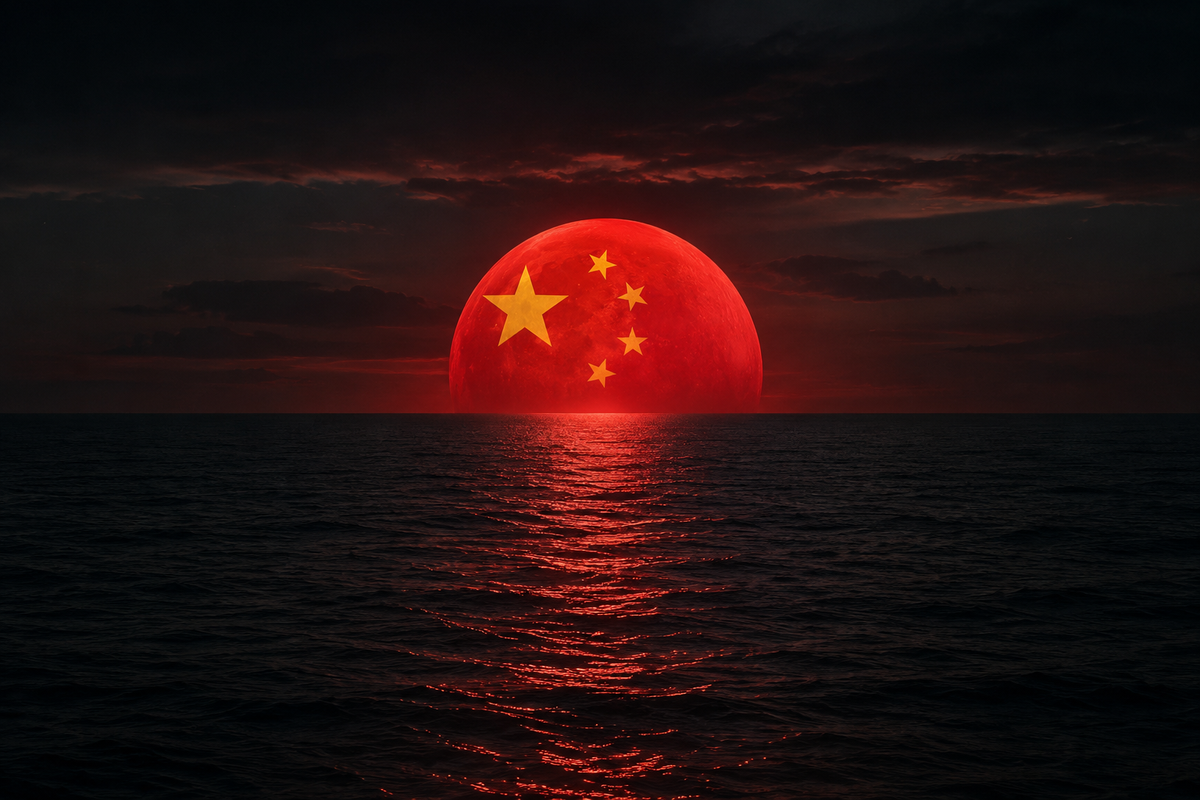
We’re at a major turning point in world history, but not many Western observers seem to have noticed.
As I put it in my postscript to Energy Transition Show Episode 238 with Jan Rosenow (December 2024):
There is also one positive thing that I think could come from the second Trump administration: The end of American hegemony in the world. The so-called “American century” is over, and along with it, the “Pax Americana.” China is rapidly becoming a globally dominant economic force, and the post-World War II security order is clearly not up to the task of containing Russia, let alone the never-ending conflict in the Middle East. Maybe it’s time for Europe, with its mature culture, its long memory of history, and its progressive policies, to fill the void left by America, and assume the mantle of leadership of the energy transition and democracy in the West.
Europe does seem to be slowly rousing itself to that challenge, at least in democracy leadership. But for leadership in the energy transition, Asia already has a runaway lead. And it is gaining speed. Big time.
For my money, there is no better team of analysts in the world on the energy transition than the team at the UK think-tank Ember: Kingsmill Bond, Daan Walter, Sam Butler-Sloss, and Antoine Issac. Their new presentation, Electric Asia, done in collaboration with Ember’s Asia Programme Director Aditya Lolla, lays out a convincing case for why Asia is “leading the electric age, powering its rise and reshaping the global order.” A light edit of few bullet points posted by Daan Walter on LinkedIn follows, but you’ll want to explore the whole deck if you want to understand where the world is headed now:
Asia is electrifying rapidly. The region generates more than half the world's electricity and accounted for three quarters of global electricity demand growth since 2000. It overtook the West on electrification in 2016 and is electrifying five times faster.
It’s not just China. Southeast Asia surpassed the US in electrification in 2023, and in EV share in 2024. South Asia surpassed the US in solar share in 2022.
The largest producer of both solar panels and battery components is China. he next-largest is the rest of Asia.
Asia manufactures over 95% of solar panels, 85% of batteries and 75% of wind turbines.
Solar plus storage is cheaper than fossil generation across most of the region.
Electric cars are now cheaper than petrol cars in many markets.
Over 70% of the energy system can already be electrified using commercially available technologies.
None of this was true five years ago.
The prize is the Asian century. A trillion dollars a year, increasingly redirected from fuel imports to an electric flywheel. Cleaner air for the nine in ten Asians exposed to air pollution above WHO limits. Faster growth, greater security and a leading position in the electrotech industries the world will buy for decades.
The Great Convergence. The West built its wealth on fossil fuels, which fuelled the Great Divergence. Asia now has the chance to build its future on electrons.
[Nota bene: The “Great Divergence” refers to the period when Western Europe—and later the United States—pulled dramatically ahead of the rest of the world in income, productivity, technology, and industrial output, beginning around the Industrial Revolution.]
I emphasize that none of this was true five years ago because that is undoubtedly a big part of the reason why so many Western observers still haven’t recognized the massive turn the world has taken. If “science progresses one funeral at a time” as Paul Samuelson (paraphrasing Max Planck) put it, geopolitical analysts seem to advance their mental framings only slightly faster.
The electrotech exporter to the world
What they should be shouting from the rooftops is that China is rapidly expanding its geopolitical influence across the world by leveraging its strengths as an “electrotech” exporter.
One part of that story that did manage to break through to Western awareness in the past couple of years is how, after being left in an extremely precarious position thanks to its reliance on LNG imports after Russia’s invasion of Ukraine in 2022, Pakistan became the second-largest solar importer in the world (after Netherlands), using Chinese solar panels to execute a great leap forward in its own energy transition. Jan Rosenow has a nice summary of that story in his excellent new newsletter, Bright Spots:
By the summer of 2025, solar had become Pakistan's single largest source of electricity, generating around a quarter of the total during peak months. Official numbers understate the boom of solar because most of the panels were installed on rooftops and behind meters, in a distributed system no one is fully measuring.
Solar installations that no one is fully measuring because they’re being done without any permission from or even notice to the utility is also how South Africa has basically eliminated the “load shedding” (grid power blackouts of certain areas) that plagued the country for years as its old decrepit fleet of coal-fired power plants became increasingly unreliable. We discussed that at length in our three-part miniseries on South Africa for the Energy Transition Show, based on my travels there in late 2025.
Those solar panels came from Asia (mostly China). Africa’s next generation of power projects is increasingly being built around solar and wind power and battery storage, as governments and investors shift away from coal and large hydropower dams in search of cheaper, faster and more reliable electricity. Most of that kit comes from Asia. Data from the Africa Solar Industry Association shows 23 gigawatts of operational solar projects had been tracked across Africa by the end of 2025. But Chinese export figures indicate 58 gigawatts of solar panels have been shipped to African countries since 2017, suggesting solar adoption may be growing far faster than official figures capture.
And now China is investing in manufacturing plants for energy transition solutions across the African continent, particularly in Morocco, South Africa, Egypt, Ethiopia, Rwanda, and Kenya. The investments span the entire energy-transition value chain: EV assembly, battery materials, battery components, solar cells, solar modules, and electric two-wheelers.
China‘s leadership in EVs is taking another great leap forward. The country became both the largest auto manufacturer in the world (displacing Japan) and the largest domestic auto market (displacing the US) in 2009—that’s right, fully 17 years ago. It then became the largest EV manufacturer in the world by 2016 (displacing the US), and then the largest EV exporter in the world (displacing Germany/Japan) in 2023. So when oil shortages due to closure of the Strait of Hormuz suddenly stimulated global interest in EVs, China was poised to capitalize on it:
China’s passenger car exports jumped 73% year-on-year in May to around 809,000 vehicles, an industry group reported Wednesday, as higher gasoline and diesel prices due to the war in Iran raised interest in electric vehicles.
This is quiet power. Perhaps that’s why so many Western observers are missing it.
Filling the power vacuum
Bloomberg oil analyst Javier Blas has pointed out that a huge part of the reason why oil prices have not risen higher than they have—surprising me and all of the veteran oil analysts I know of—is that China quietly stopped buying 4 million barrels a day (mb/d) of oil after the Strait of Hormuz was closed. That went a long way toward helping to close the gap on an estimated 14 mb/d of missing oil exports from the Persian Gulf.
But they didn’t announce it. At all. It took oil data analysts poring over the data to figure out where the missing demand went. But it was an enormous help in balancing the global market despite the closure of the strait, and really benefited everyone… not just Iran, for whom China is the largest trading partner and by far the largest buyer of Iranian oil.
President Theodore Roosevelt famously articulated his approach to diplomacy as, “Speak softly and carry a big stick.”
President Trump uses the opposite strategy: He rages and blusters and wields the big stick of US military might wantonly and capriciously, but has no talent or taste at all for diplomacy and often doesn’t follow through with his threats, earning him the TACO (Trump Always Chickens Out) label—especially after asserting that a peace deal with Iran was just around the corner 38 times now without actually producing a deal. Over the past year, various European officials have intimated that they don’t believe anything Trump says. Is it any wonder that only 11% of Europeans view the US as an ally?
One unnamed Western diplomat recently told Reuters:
"For us, the main lesson is that we can't rely anymore on the post World War status quo, and that we need to be not only a soft power space, but a space that can be also backed by power," said one Western diplomat noting that Europeans were acting quickly to expand their military capabilities.
China is clearly stepping into the power vacuum created by Trump’s abandonment of the role that the US played in the “American Century,” but instead of carrying a big stick, it’s not speaking at all and toting a big balance sheet along with the capability to deliver not just all the solutions of the energy transition, but to invest in their manufacturing the world over. That is quickly making them into the world’s most important trading partner at least, and an ally at best. And they’re taking the rest of Asia with them.
Trump indulged Elon Musk’s racist resentments about South Africa, the country of his birth, ambushing and alienating its leadership. But China’s Chery Automobile bought a South African automotive plant with the intention of using it to build EVs, build a local supplier base, and create jobs.
Military might is no longer the defining characteristic of geopolitical power. Indeed, Trump’s military misadventures rather call into question the value of having the world’s largest military at all. Enduring power in the century ahead is arguably much more about economic power, trade alliances, and political alliances—the very domains in which China has quietly excelled, and America under Trump’s leadership has floundered.
We are witnessing the rise of the Asian Century. I wonder how long it will take the dominant powers of the past century to notice.
The Nelder Notes podcast and newsletter is free today. But if you appreciate them, you can support my work by becoming a Premium subscriber now. If enough listeners do, I will keep them free to all.
Sources
Episode 238 – Transition in Europe 2024, Energy Transition Show, December 4, 2024.
Daan Walter, Sam Butler-Sloss, Antoine Issac, Kingsmill Bond, and Aditya Lolla, Electric Asia, Ember, June 11, 2026.
Kenneth Pomeranz, The Great Divergence: China, Europe, and the Making of the Modern World Economy, Princeton University Press, 2000.
Jan Rosenow, “Pakistan: the solar revolution nobody planned,” Bright Spots, June 7, 2026.
South Africa 2025, Energy Transition Show.
Allan Olingo, “Renewable energy is overtaking traditional power projects across Africa, industry leaders say,” Associated Press, May 26, 2026.
Nqobile Dludla, “Facing global headwinds, Chinese automakers make a play for Africa,” Reuters, June 26, 2025.
Njenga Hakeenah, “As Chinese Solar Manufacturing Emerges Across Africa, Trade Pressures Threaten Expansion,” China Global South Project, May 18, 2026.
Noah Berman, “China’s Solar Industry Follows the Sun to Africa,” The Wire China, April 5, 2026.
Sebastian Ibold post, LinkedIn, 2025.
“Rwanda’s Ampersand partners BYD to tap Africa’s $5bn motorcycle market,” Daba Finance, June 20, 2024.
Chan Ho-Him, “China car exports jump 73% in May as high fuel prices raise interest in EVs,” Associated Press, June 10, 2026.
Javier Blas, “Ten Reasons Oil Is Still Below $100 a Barrel,” Bloomberg, June 10, 2026.
Aaron Blake, “How many times has Trump claimed an Iran deal is around the corner?” CNN, June 9, 2026.
“Only 11% of Europeans view US as ally, survey shows,” Reuters, June 10, 2026.
John Eligon and Zimasa Matiwane, “South African President Talks Trump, Racism and That Oval Office ‘Ambush’,” The New York Times, March 5, 2026.
Nimi Princewill, “Trump’s tariffs are sending African countries into China’s hands,” CNN, August 5, 2025.
Nqobile Dludla, “China's Chery aims for 2027 start at newly acquired South Africa plant,” Reuters, March 31, 2026.
Andrea Shalal, “Trump's attacks on Europe's leaders worsen transatlantic frost,” Reuters, May 1, 2026.
We never use AI to produce any of the written or spoken content you find on Transition Times. We do use AI as a research tool (and vet the information so received).
We also occasionally use AI to generate graphics and sounds.