
TT#2: Will the Iran war accelerate the energy transition?
We review the arguments for and against the idea that the Iran war and the closure of the Strait of Hormuz will accelerate the global energy transition.
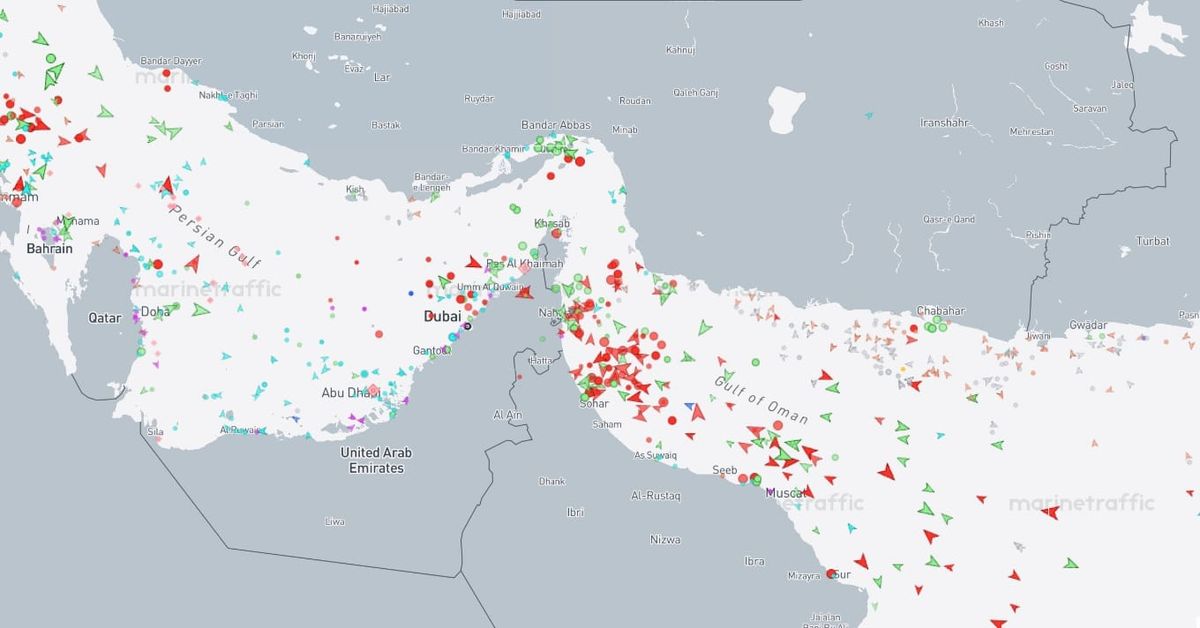
With the Iran war now into its third month and the world bracing for the impact of lost oil and gas imports (even as equity market traders continue to shrug it off under the rubric of “seeing through” the conflict to eventual stabilization), the commentariat has turned to asking the critical question: Will the Iran war accelerate the energy transition?
On April 30, United Nations climate chief Simon Stiell was unequivocal on the question, calling it an “immense irony” that “Those who’ve fought to keep the world hooked on fossil fuels are inadvertently supercharging the global renewables boom.”
Longtime foreign climate correspondent Chico Harlan, formerly of the Washington Post, explored both sides of the argument in his May 6 article for the New York Times:
With the world’s most important fossil fuel supply route at a near-standstill, many advocates for wind and solar say the transition to renewable energy is about to shift to a much higher speed.
Kingsmill Bond, Daan Walter, Sam Butler-Sloss and Antoine Issac of Ember, who dubbed the transition to the new clean energy regime the “electrotech” revolution put out a research note on April 14 detailing their argument for why the present fossil fuel shocks will accelerate the transition:
The 1970s reshaped the energy system despite alternatives that were slow, expensive and addressed only a fraction of fossil demand. Today’s are faster, cheaper, fuel-free and able to replace most of it. For the first time, superior low-cost alternatives exist at scale.
For a deep discussion of their “electrotech” thesis and outlook for the transition, see Energy Transition Show Episode 259.
Reuters columnist Kate Abnett pointed out that some nations are reverting to coal and oil as an immediate stopgap for LNG not being shipped from the Middle East. Still, she quotes Turkey's Climate Minister Murat Kurum, who will preside over the U.N.'s COP31 climate summit this year:
The best way to protect citizens from the violent convulsions of global energy markets is to accelerate the clean-energy transition.
Writing in Carbon Brief, Josh Gabbatiss reviews a variety of sources reinforces that point, showing that although countries such as Japan, Pakistan and the Philippines have responded to disrupted gas supplies with plans to increase their coal use, the increase is likely to be small and not an enduring effect.
Notably, experts say that there is no evidence of the kind of structural “return to coal” that would spark concerns about countries’ climate goals.
Reuters columnist Yawen Chen looks at the question through the lens of the effects the conflict has had on the oil market:
The current Iran war, which highlights the risk of relying on a volatile area for such a fundamental energy source, will incentivise big Gulf fossil fuel buyers like Japan, South Korea and India to transition quicker into renewable energy and nuclear, and even back into coal.”
In their newsletter and podcast, The Polycrisis, Kate Mackenzie and Tim Sahay lay out a coherent argument replete with evidence for why the Hormuz shock will destroy demand for fossil fuels permanently because the clean, green alternatives are now simply better. They argue that much of that transitioning will be led by countries as a deliberate strategy to reduce their exposure to volatile and undependable supplies of oil and gas:
A fossil fuel supremacist government has made oil and gas costly and unreliable and accelerated the turn to the electric world order.
Even writers who are not normally focused on energy have been compelled to weigh in, thanks to the enormous damage being done to the critical infrastructure of the Gulf, supply chains for everything from food to plastics and chemicals, geopolitical relations, and consumers’ pocketbooks. Overwhelmingly, they see the conflict producing lasting transformations of the global energy system.
Economist Paul Krugman shares our view that “most forecasts are insufficiently alarmist,” pointing out that demand destruction always has long-term effects, but that the effects of this disruption will be far greater than those of previous energy crises:
Finally, beyond the short run there are far more alternatives to oil now than there were in 1973. Given time — even a year or two — the world could make major shifts to other energy sources.
The stalwart Cory Doctorow of enshittification fame weighed in with a delightful global perspective on the question in “Comrade Trump is the unwitting hero of a green revolution”:
This de-fossilising was already the direction of travel: the only question was the pace at which the transition would proceed – and Comrade Trump has just stomped all over the (liquefied natural) gas pedal.
Writer Rebecca Solnit cites a number of sources, including Ember, supporting her argument for the conflict as a transition accelerant in “Truth, Consequences, Climate, and Demand Destruction”:
The intent is to favor fossil fuel and strangle the energy transition even as most of the rest of the world moves forward with it. But the feckless attack on Iran may have far more impact than all these measures.
I offered my own deeper exploration of the evidence for and against the question of whether the conflict will accelerate the energy transition in Nelder Notes #2. So if you want to read that, become a Premium subscriber and check it out.
Got an item you’d like us to cover?
We’d like Transition Times to help increase the visibility of all the great work that’s being done out there. So if you have an article, report, study, podcast episode, newsletter post, video clip or anything else that you think is worthy of a shout-out in Transition Times, email it to suggestions [at] transitiontimes [dot] net! We welcome all submissions, as long as they’re relevant to the energy transition.
We never use AI to produce any of the written or spoken content you find on Transition Times. We do use AI as a research tool (and vet the information so received).
We also occasionally use AI to generate graphics and sounds.