
NN#2: The Trump Paradox
Trump may have done more to accelerate the energy transition than policy ever could.
One of the seminal ideas that one learns in studying the global energy transition is the Jevons Paradox.[1] In 1865, William Stanley Jevons observed that technological improvements that increased the efficiency of coal use led to the increased consumption of coal in a wide range of industries. The idea that the benefits of improving energy efficiency would be undercut by increased energy use because it makes energy cheaper has since been variously referred to as the Jevons Paradox, the Jevons effect, and the rebound effect.
The idea isn’t wrong, but it’s only true in certain cases. A lot of casual analysts have misused the idea by taking it to extremes and arguing, for example, that improving efficiency cannot be of any help in the energy transition. As if improving the efficiency of a light bulb inevitably means that everyone is now going to light up their living rooms like a stadium. In reality, improving energy efficiency is a key pathway to meeting our climate goals, because the less energy we need to use, the less energy we need to find a way to decarbonize. It’s an essential tool in the kit.
But I digress.
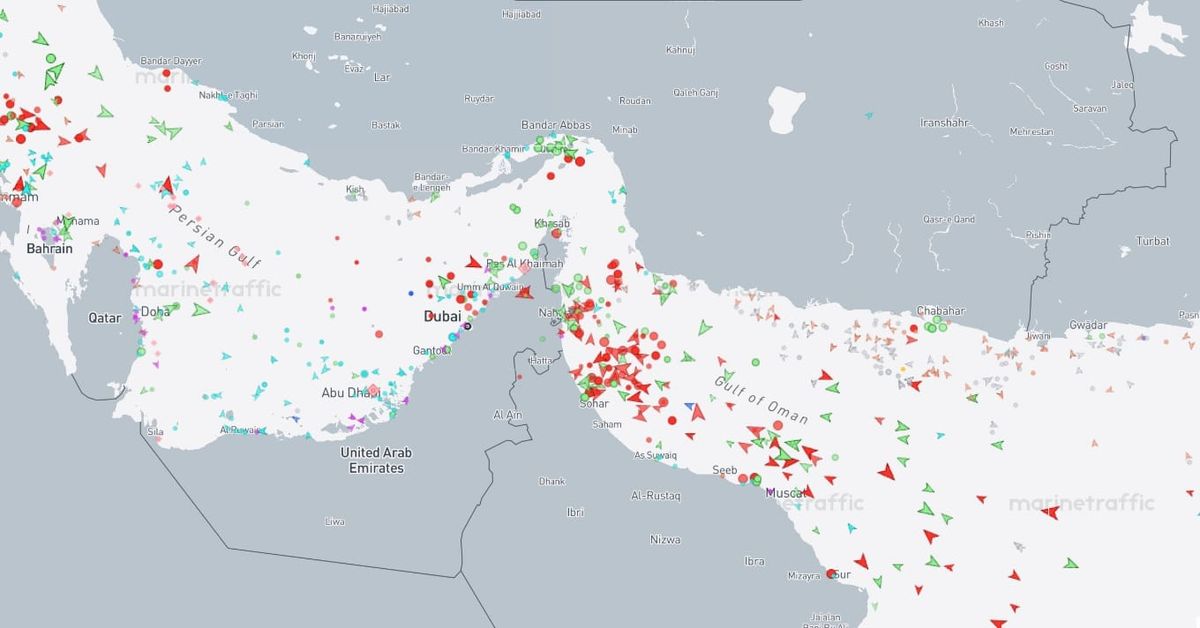
As the world continues to struggle to understand the full effect that the Iran war is bound to have on the global economy, global supply chains, and many other matters of urgent interest to leaders of every country in the world, many are wondering how it will affect the energy transition. But the answer is straightforward.
I’m going to call it the Trump Paradox: In the name of stopping Iran from building a nuclear weapon (inter alia, his justifications have been manifold, and his goalposts shift constantly) what Trump has done in Iran will do more to advance the energy transition than policy could ever accomplish.
It’s a paradox because so much of what Trump has done in his second term is all about stopping the energy transition (we detailed those efforts in Energy Transition Show Episode 269) and giving every possible advantage to the fossil fuel industries.
The cargoes that had set sail from the Persian Gulf before the conflict began have now reached their destinations and unloaded, and now the world is hitting the “air pocket” in the supply line, as oil analyst Rory Johnson put it in that episode. Because there aren’t any more ships en route to distant markets with their cargoes of oil and gas from the Gulf. Chinese refineries can probably rely on crude drawn from China’s massive, nearly 1.4 billion barrel strategic petroleum reserve, but other Asian refineries are at risk of having no crude oil to process.
Very simply, the closure of the Strait of Hormuz, and the impact of removing roughly 15% of global oil supply and 20% of global LNG supply for two months and counting, is adding up. The world is already down about a billion barrels of oil, and it will take a long time to make up that loss and refill empty storage facilities, let alone repair the damage done to at least 80 major oil and gas assets in the Persian Gulf, according to the International Energy Agency. But don’t take my word for it; Exxon CEO Darren Woods offered a blunt assessment on May 1: “It’s obvious to most that if you look at the unprecedented disruption in the world supply of oil and natural gas, the market hasn’t seen the full impact of that yet… There’s more to come if the strait remains closed,” he said.
Many observers don’t see the oil markets normalizing until the fourth quarter. Even if the strait were to be reopened today, and hostilities were to cease, it would be at least a month before the first cargo of fuel arrived in Asia. It would take months more to get significant quantities delivered because it takes roughly two months for an empty tanker to return from Asia to the Gulf, reload, and then transport a new cargo back to Asia. And it will be at least two years before the region’s export capacity could be restored to previous levels, best case.
The math is immutable. The world is now headed for an unavoidable period of high prices and even outright shortages for fuels and other feedstocks produced from oil and natural gas.
A few more observations, drawing on some numbers that Christopher Clack helpfully summarized in his LinkedIn post of May 4:
· Air traffic will continue to be affected, with thousands of flights canceled across the world, especially in Asia. Europe could see significant disruptions, because 40% of Europe's jet fuel imports transit Hormuz.
· Food production will be affected globally, with reduced yields later in 2026 and inflated food prices likely continuing into 2027. Gulf states supply roughly half of globally traded urea, a feedstock for commercial fertilizers, and ~30% of traded urea and 25% of ammonia transit Hormuz.
· Inflation due to the closure is likely over 2%, at minimum, for at least six months, and more than 3% of global GDP is at risk. The OECD puts headline inflation at 4.0% in March, and rate cuts by the Fed or the ECB this year are looking increasingly unlikely, while the dreaded “stagflation” looks increasingly baked in.
The world is in for a prolonged period of high prices, not just for oil and gas, but for everything. Recent estimates suggest that were the strait to be opened tomorrow, the regular flow of oil wouldn’t be reestablished until November. I think that’s optimistic. And in the interim between now and whenever the exports start flowing again, there will be pain, in the form of high fuel prices, outright shortages of fuels and feedstocks, disrupted supply chains, and higher prices for everything, globally, because nearly everything still moves from point A to point B on the back of oil (mainly diesel) at some point in its journey.
Kicking the habit
The world’s nations are already trying to minimize that pain as much as possible by accelerating their own energy transitions: electrifying everything to cut their demand for oil and gas, while increasing their own domestic renewable energy production however they can.
Justin Gerdes’ excellent Quitting Carbon newsletter rounded up some of the actions policymakers had taken as of April 7, but they’ve continued to seek ways to reduce their dependence on oil and gas since then.
At the end of April, Colombia hosted the First Conference on Transitioning Away from Fossil Fuels, where more than 50 nations (accounting for about one-fifth of global fossil fuel production and one-third of consumption) agreed to explore how trade measures, including bilateral agreements, can support the move away from fossil fuels. Arguably, that agreement, along with a new international ‘workstream’ designed to help other countries develop similar plans, amounts to more tangible progress on the energy transition than the COP conferences have made in total. The conference was planned long in advance of the Iran war, but the urgency of the war no doubt increased its profile for having the right focus at a critical “teachable moment.”
At the conference, France unveiled its new plan to exit fossil fuels, which included clear targets to end their use of coal by 2030, oil by 2045, and natural gas by 2050.
On May 5, the Financial Times noted that South Korea has committed to an expedited expansion of renewable energy.
Sales of electric cars soared 51% in continental Europe in April, and markets in Asia are likely to see surging sales of EVs as well.
In Pakistan, where about 40% of its petrol goes to fuel the 30 million two-wheelers and three-wheeled autorickshaws that dominate its roads, sales of electric models are surging. That’s partly due to a federal subsidy that went into effect in February that covers a fifth of the price of a vehicle and interest-free loans for the rest, but it’s also driven by sheer economics. A Pakistani household earning the median wage now pays nearly a third of its daily income just to buy a liter of petrol. Running an electric two- or three-wheeler on electricity generated at home with solar, which has spread rapidly across Pakistan in recent years, is a significant economic gain.
The counter-argument
There are a few naysayers, of course. Let’s consider the counter argument, as articulated by former BP chief economist Spencer Dale in the FT on May 5.
First, he speculates that some countries, especially China and India, might turn to domestic coal to fill the gap in imported fuel rather than accelerate their shifts to renewables and nuclear power. That point was ably countered by China analyst Lauri Myllyvirta on LinkedIn on March 12. He notes that in response to the sudden physical shortages of natural gas in the 2021-2022 crisis, China and a few other countries did ramp up their use of coal generation, but that was a temporary measure to close a near-term gap. Their simultaneous efforts to accelerate their energy transitions produced structural changes in their energy mixes and more electrification, and ultimately, that crisis pushed coal off the grid even faster than it had been prior to the crisis. At the same time, the war in Iran will make coal more expensive and even less competitive against clean energy. So this crisis will reduce fossil fuel consumption both in the short term and in the long term.
Dale’s next argument is that some countries may be reluctant to increase their dependence on global supply chains for clean-energy technologies, such as rare earths, batteries and solar panels. However, I’m not aware of any countries using that sort of rationale to choose between fossils and clean energy. Instead, they always seem to reach for whatever works right now—and what works right now is cheap and effective Chinese batteries and solar panels, which are available in abundance.
Dale goes on to argue that governments may perceive a trade-off between energy security and affordability, but really fails to make the case. He reasons that because internal combustion engine vehicles have fuel tanks, they offer more security than the power grid, which is susceptible to physical and cyber attacks and has limited storage capability. Which seems rather glib to me, considering that the world is again facing a very real shortage of fuels to fill those tanks, while no major attacks have occurred on power grids. Here, he seems far more interested in hypotheticals than the stark reality we are living through.
He also worries that short-term government subsidies designed to cushion the blow of high fuel prices, along with greater investment in energy storage and military security, could crowd out investment in clean energy. But that’s exactly the sort of short-termism that landed fuel importers in the vulnerable position they’re in now. Apparently Dale doesn’t believe that this might be a teachable moment, and one that provides the political capital to escape short-termism and the fossil fuel trap permanently. He seems to think of “sustainability” as merely a green-shaded conceit, and not a deliberate goal that relieves a country of the risks of sudden disruptions by putting it on a sustainable path.
Color me unconvinced.
Structural shift
Back in the real world, I fully expect most governments will want to get off the merry-go-round of subsidies and disruptions beyond their control, and find a new stable footing in their safe, domestic renewable energy resources. The present disruption will indeed accelerate the world’s efforts to kick the fossil fuel habit for good.
United Nations climate chief Simon Stiell concurs, calling it an “immense irony” that “Those who’ve fought to keep the world hooked on fossil fuels are inadvertently supercharging the global renewables boom.”
Those who argue that the Hormuz blockade won’t motivate importers to transition away from oil and gas are betting that the conflict will be resolved relatively quickly, and it will be easier to find ways to bridge over temporary supply disruptions than to transition away permanently. That is certainly the argument that you’ll hear from equity traders and market journalists. But it’s always easier and less risky to argue that things will get back to normal than it is to call a structural shift marking a departure from the way things have always been.
I’m not so sure. On May 8, The Washington Post reported on a confidential intelligence community assessment delivered to the White House saying that Iran retains a substantial missile and drone arsenal, and is entirely capable of outlasting the Trump administration’s willingness to continue prosecuting the war. In recent weeks, Trump has evidenced extreme irritation with anyone asking him about the continuance of the conflict, and continued to assert that it will be over soon, even against all evidence to the contrary. He is clearly anxious to move on and frustrated that he can’t just walk away from it without winning a single one of his alleged objectives. But for many reasons, he can’t. And the longer the stalemate continues, and the longer the deficit of oil and gas cargoes continues to mount, the more pressure importing countries will feel to kick the fossil fuel habit entirely. And again, most of the world has only begun to feel the impact of the shortages.
I believe that the announcements we’ve heard about accelerated transition efforts around the world are just the beginning. Much, much more will be done in the coming years, as sustained high prices for oil and gas do for the energy transition what policy rarely could: Make the electric solutions cheaper than the solutions that burned hydrocarbons. And with every electric vehicle and heat pump and stovetop sold, the global demand for fossil fuels will be cut permanently. There is no credible scenario in which a shift to EVs reverts back to internal combustion engines, or a deployment of heat pumps gets undone and converted back to oil- and gas-burning boilers, for any reason.
In the fullness of time, I think we’ll look back and see that, more than any other national leader in history, it was the fossil fuel industry’s greatest friend, and the energy transition’s greatest foe, who accelerated the energy transition, swiftly, comprehensively, and globally. All because of his massive strategic blunder in the Persian Gulf, and his cabinet of manifestly unqualified toadies who couldn’t imagine what might happen if Iran closed the strait—a scenario that had been studied and modeled and gamed out repeatedly, for decades, by highly qualified experts who were deemed insufficiently loyal and exiled from the administration.
Future chroniclers of the energy transition may not find much analytical utility in the Jevons Paradox, but I am confident that the Trump Paradox will stand as a major turning point in its inevitable consummation.
[1] William Stanley Jevons ends with an “s” but many people mistakenly use the term as if it were a possessive: “Jevon’s Paradox.” It’s not. You could correctly use the possessive form as “Jevons’ Paradox,” but I find it simpler to put a “the” in front to avoid the need for an apostrophe entirely and eliminate any confusion: the Jevons Paradox. Pedantic, yes, but it’s been a constant irritation for decades for this former technical editor and it’s my newsletter, so I can be as pedantic as I like.
The Nelder Notes podcast and newsletter are free today. But if you appreciate them, you can support my work by becoming a Premium subscriber now. If enough listeners do, I will keep them free to all.
Sources
Wikipedia contributors, “Jevons paradox”, Wikipedia, accessed May 13, 2026.
Energy Transition Show, “Episode 269: Trump’s war on the energy transition”, Energy Transition Show, 2026.
Javier Blas, “Iran war: China’s invisible hand is rebalancing the oil market”, Bloomberg Opinion, May 8, 2026.
Alex Longley, “Top traders say billion-barrel oil shock to echo long after war”, Bloomberg, April 21, 2026.
Associated Press staff, “Europe has maybe 6 weeks of jet fuel left, energy agency head tells AP”, Associated Press, 2026.
Spencer Kimball, “Exxon CEO says oil market hasn’t felt full impact of Iran war disruption”, CNBC, May 1, 2026.
Christopher Clack, “LinkedIn post of May 4 on energy markets, food security, and inflation”, LinkedIn, May 4, 2026.
OECD (via Windfair), “Inflation and energy prices data referenced by OECD”, Windfair, 2026.
Justin Gerdes, “Trump’s Iran war is driving politicians and consumers to embrace clean energy”, Quitting Carbon, 2026.
Transition Away Conference, “First Conference on Transitioning Away from Fossil Fuels”, Transition Away Conference, 2026.
Financial Times, “Countries explore trade measures to move away from fossil fuels”, Financial Times, 2026.
Reuters staff, “France unveils fossil fuel exit plan at Colombia climate summit”, Bloomberg, April 29, 2026.
Financial Times, “South Korea commits to faster renewable energy expansion”, Financial Times, May 5, 2026.
Damian Carrington, “Electric car sales surge across Europe amid high petrol prices”, The Guardian, April 20, 2026.
Ali Ahmed, “Soaring costs drive Pakistan to EVs”, The Express Tribune, 2026.
Peter Campbell, “Spencer Dale: energy security and the limits of the transition”, Financial Times, May 5, 2026.
Lauri Myllyvirta, “Lots of questions and muddled thinking about coal and the energy transition”, LinkedIn, March 12, 2026.
Simon Stiell, “UN climate chief: an immense irony is unfolding – fossil fuel proponents inadvertently supercharging renewables”, UNFCCC, 2026.
Missy Ryan, Karen DeYoung, and Dan Lamothe, “U.S. intelligence assessment says Iran can sustain conflict longer than expected”, The Washington Post, May 7, 2026.
Michael Crowley, "War Games and Warnings on Strait of Hormuz Went Unheeded by Trump," The New York Times, June 2, 2026.
Bennito L. Kelty, “Hundreds of diplomats fired by Trump in 'unprecedented' move amid global crisis: report,” Raw Story, May 16, 2026.
We never use AI to produce any of the written or spoken content you find on Transition Times. We do use AI as a research tool (and vet the information so received).
We also occasionally use AI to generate graphics and sounds.