
NN#3: Data Center Revolt
We’ve been told that we have to accept data centers being located in our communities and on our grids. But before we do, we ought to demand answers to some major questions about our social priorities.
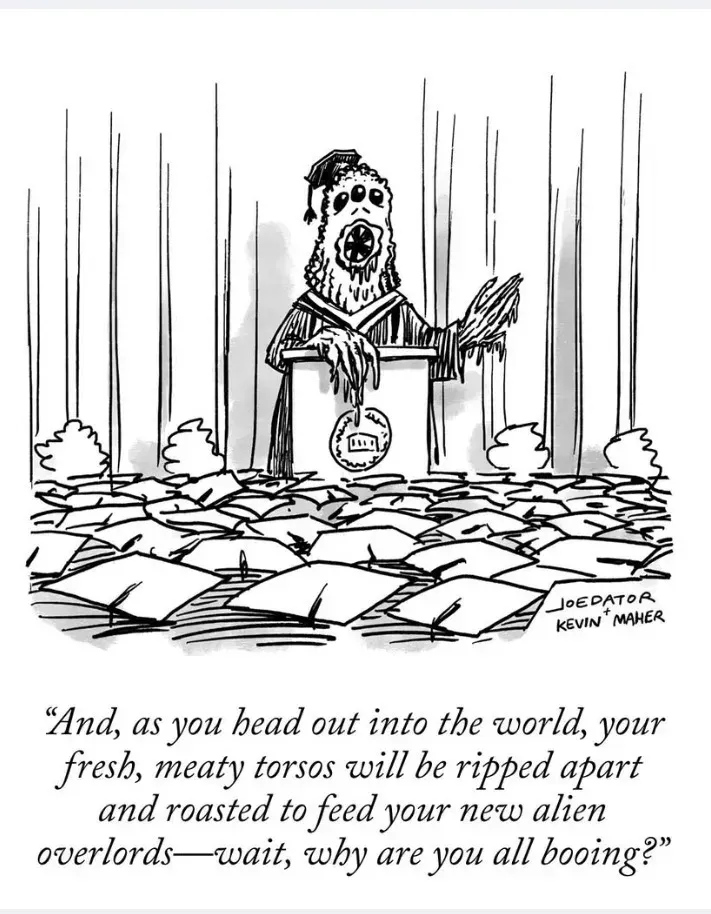
The discourse around grid power has become all-AI, all the time.
We’re not even talking about how to decarbonize the grid anymore. That is sooooo pre-2024.
Utility integrated resource plans (IRPs) used to the battlefield on which utility incumbents fought to extend the lives of their soon-to-be-stranded-assets burning fossil fuels, while consumer advocates and utility commission staff offered alternative models showing how to transition cost-effectively to renewables to meet state decarbonization goals.
So many proceedings. So many models. Tens of thousands of hours of work by skilled practitioners to plot out pathways and lead our societies into a future with a stable and livable climate.
But in the past two years or so, it’s all just been brushed aside by the tide of AI. Data centers are now getting approval by bypassing those IRP proceedings entirely, with the bypass justified under vague claims to emergency necessity.
Meanwhile, those in media whose job is it to guide the discourse and watch out for the public interest are asking all the wrong questions.
They ask: How are we going to manage these huge new loads on our grids?
Can these new loads be integrated in such a way that they are actually grid assets and not just more demands we must meet by generating more power?
How can we ensure that the new power generation for these data centers gets paid for by the data center companies and not by the general public?
They’re not even asking about the carbon footprint of these data centers. No one is asking a governor, or a utility commission chairman, to explain how the emissions from these new data centers, nearly all of which are being powered with generators burning natural gas or even diesel, will render moot their previous commitments to decarbonizing the energy systems in their jurisdictions. It’s as if those hard-fought plans and policy commitments to decarbonize a grid, or a state, or a region, never even existed. Nobody mentions them. All of the questions they’re asking assume that the entire project of building data centers has been decided and isn’t even up for debate.
It's like ESG. So passe. Nobody cares about all that stuff anymore. Why even bring it up? It was all just a fad. Don’t you know there’s a gold rush on now? Can’t you feel the excitement?
Aren’t you ALL IN ON AI?
It’s the hot new sensation that’s sweepin’ the nation!
No, they have other questions they want answered.
Like how we can repurpose that new hydro project that was going to help us decarbonize a power grid, so that it can supply a data center instead?
Like how are we going to power these data centers when they consume vast amounts of water in a desert environment where fresh water was already becoming scarce before the data centers. We need more water! What’s a higher use of water—golf courses or data centers?
Like the fantastic future for nuclear power. I’m now seeing full-length shows on what used to be news platforms, like Bloomberg, aimed at teaching the public all about nuclear power technologies and how they might be used to power data centers.
Like can we use carbon capture and sequestration (CCS) or carbon capture, utilization, and storage (CCUS) to capture the emissions from these data center power plants and come up with a solution to global warming all at once! Could AI be good for the planet, actually?
I have lost count of the number of stories that have cropped up in my news feeds over the past couple of months about CCS. To read them, you’d think CCS was the biggest growth industry on the planet. New players. New technologies. Incentives. One story after another touting the pipeline of CCS projects. Wild projections about the future of direct air capture (or DAC). Dreams of billions of tons of CO2 safely captured and tucked away for eternity. Or maybe a century.
We’re told: AI is a juggernaut! An unstoppable force, arriving from nowhere, asked for by no one, just materializing out of the ether. And we all must do whatever it takes to meet those new data center loads! As quickly as possible! Grid expansion isn’t moving nearly quickly enough to meet the oncoming demand! We have to speed it up immediately! We should be talking about deregulation! Permitting reform! ABUNDANCE!
Don’t you know this is a matter of national security? A new geopolitical arms race that we MUST win?
Anatomy of a mania
But hang on.
None of this is real!
Well, the data centers and their power demands are, but everything downstream of that, especially the commentary, is based on a hallucination… one so big even an AI engine would be embarrassed to suggest it. Everything I just mentioned is from an alternate reality. A hallucination so powerful, it seems to have captured the minds of just about everyone. Suddenly, everybody accepts and believes that we’re inevitably headed into this new AI-powered world, and we have no choice but to accommodate it. Whatever it needs, we must supply. It reminds me of nothing so much as the “domino theory” that got the US tragically embroiled in the Vietnam War.
Can we just pause for a minute, take a deep breath, and ask what we’re doing here, and why? Is this, in fact, something we have to accept and accommodate?
Let’s start with where this push to integrate AI into everything came from.
It wasn’t consumers. I don’t even think it was business leaders.
It was from a handful of tech companies that built a new technology, dazzled us with its apparent capabilities, then sold us a story about how it will take over everything. And that if you don’t integrate it into your business, then you will lose because your competitors are using it to squeeze more productivity out of fewer man hours.
Allegedly.
So that was Step One: Get business leaders excited about it, either out of fear or greed, the two most fundamental animal spirits of capitalism. Either one gets the job done.
Step Two: Entice elected officials with promises of jobs and tax revenue. Mostly the latter.
Now, this is probably the biggest sort of deficiency I observe in the media coverage of the AI boom. I’ve read hundreds of articles about the potential, the cost, the impact, the opportunity, etc. for data centers in a given community. I don’t think any of those journalists ever asked an elected official why they are trying to entice a data center to locate in their jurisdiction. Not even once. But that’s actually where the pipeline starts: With mayors, county officials, state legislators, governors, and even US Congressmen actively soliciting the business of the new data center overlords, dangling tax breaks and other goodies before them to sweeten the deal.
And for my purposes today, it really doesn’t matter if it’s one of the dedicated AI companies like OpenAI or Anthropic, or a tech titan like Meta or Microsoft or Google or Amazon, or if it’s one of those computing service providers you’ve maybe never heard of, like Equivinix or Vantage Data Centers or CoreWeave, who actually build and own and operate the data centers and rent out computing capacity to the big tech giants so that they don’t have to invest their own capital in the infrastructure. (Paul Kedrosky has written about this at length, see the links in the show notes.) For my purposes today, they’re all the same, whether they are manufacturing these picks and shovels of the new AI gold rush for their own purposes, or just renting them out to someone else. Ultimately, it results in a data center, almost always consuming power from its own gas-fired generators, with no restrictions or oversight whatsoever on the carbon emissions from those generators, and also consuming a ton of fresh water to provide cooling.
These elected officials are starry-eyed over the tax revenue and economic stimulus they could stand to attract if they enticed data centers to locate in their areas. For just one of many, many examples, Republican lawmakers in Ohio established a tax exemption in the early 2010s to lure technology companies to Ohio—long before the modern boom in data centers. For facilities that cost $100 million or more to build, the exemption allows developers to waive up to 100% of Ohio’s 5.75% sales tax for up to 15 years. And it can apply to capital-intensive, private natural gas plants some developers are building to fuel their operations. In 2025, that exemption was worth a reported $1.6 billion, eleven times more than the original estimate of $136 million that was sold to taxpayers. And who got the benefit of that $1.6 billion in tax breaks? The usual: Meta, Alphabet and Amazon, all of which have recently built or are building arena-sized data center warehouses there, according to local reporting.
But no one ever holds the officials to account for courting those data centers and their sweet, sweet economic stimulus. No one ever asks them if they did a study on the electricity and water demands of the data centers and determined that the local area’s resources could support them. (And for the record, I’m not aware of any such study being done anywhere, but of course that doesn’t mean there haven’t been any.) When the question arises about who will have to pay for the grid expansion to support those data centers, the people who invited them to begin with are rarely asked to answer the question. That’s easily passed off to the state utility regulator, or a utility, or someone else. If the officials brought in some economic development they can tout the next time they’re up for election, they win. They never have to answer for the effects of those decisions on the people they’re supposed to represent, let alone the CO2 burden they welcomed with open arms.
Step Three: Commit to building the data center (or better, if you’re a Meta or an Alphabet, get someone else to build it and put zero skin the game yourself but promise to buy some compute from it in the future). Let the utility regulator figure out how to allocate any additional costs of grid expansion. Let the utilities figure out how to use the data center load to justify their own load growth forecasts and thus extract more guaranteed revenue from all utility customers via their regulated rate of return, whether anyone even uses the data center or not. Let the locals who have to listen to the whine of the data center’s generators and cooling systems decide to either like it or move away. Suck up the water, which you’ll get for nearly free as part of your sweetheart deal for locating there.
Step Four: Talk about how you’ll try to rely on clean power in public, but then in private, buy as much gas generating capacity as you can get your hands on, along with the infrastructure to deliver the gas. And promise that you’ll figure out how to capture the emissions Real Soon Now.
Definitely do not mention that the world’s operational carbon capture and permanent storage capacity—where the captured carbon isn’t just used to produce more oil and the carbon isn’t going to be sequestered permanently—is laughably negligible. Most studies don’t try to distinguish the two, and treat the carbon that gets captured, reused, and then eventually released into the air the same as carbon that gets captured and permanently sequestered. One study published in late 2025 and led by Imperial College academics presented the first audited total amount of industrially derived CO2 permanently stored underground through carbon capture and storage. It found that since 1996, the total amount of CO2 that has been sequestered up to 2024 globally was 383 million tonnes. By comparison, total energy-related emissions globally are roughly 38 Gt/year.
In other words, the total amount of CO2 that has been permanently stored underground so far, for all time, globally, is about 1% of annual emissions just from energy consumption. Not counting CO2 from agriculture, industrial processes, land use, and so on.
For another point of reference, IEA estimates that global capture capacity could increase to 430 million tons per year by 2030. That’s about 1.1% of annual energy-related emissions.
I don’t suppose you came across any of those numbers in the stories you’ve seen recently about CCS projects.
And if you have to face the fact that global CCS technology is in no way prepared to actually capture the emissions from your project? No problem. Just promise that you’ll sort that out later and get on with building whatever it is you want to build, as the oil & gas industry has been doing for the past three decades.
And if the gas and CCS plan meets with resistance? You can just turn to the other magic unicorn in the energy world, small modular reactors (or SMRs). Thanks to an industry-sponsored all-out media blitz the past couple of years, nearly everyone in the world has heard about SMRs, their virtues, and how they’re the energy source of the future. They might even be under the impression that SMRs are a commercial technology that exists.
Definitely do not mention that there are basically two operating commercial SMRs in existence today, despite years and years of hype. One in Russia and other in China. With a combined generating capacity of about 300 MW. That’s about one-third the capacity of a single conventional nuclear power unit. China built about three times that much capacity daily in solar alone in 2025.
And then, finally, Step Five: IPO. Launch your AI company on the public markets and rake in the bucks. OpenAI is targeting a valuation of between $850 billion to $1 trillion. Anthropic has targeted a slightly lower initial valuation at $350 billion to $800 billion, but is broadly expected to reach the $800-900 billion range if it maintains its current revenue trajectory and reaches sustained profitability ahead of OpenAI.
Then just kick back and watch as the world struggles to make up for job losses caused by your technology. Watch businesses struggle to find and fix all sorts of errors introduced by your technology. Watch communities struggle with their sources of fresh water drying up and their grid power prices exploding due to the costs of building out the grid. Watch residents near your data centers struggle to accept the decline in their home’s value because it’s now within earshot or eyesight of a data center. Watch the state’s carbon reduction targets, arduously hammered out in uncountable public forums for years, vanish without even a eulogy.
Rising resistance
All it took is a handful of billionaires with a technology they wanted to push on the public, and a few percent of the profit dished in the direction of some local elected officials, to pull the whole thing off. Nobody else’s opinion was even solicited. We abandoned years of effort on the project of decarbonization without so much as a debate in order to chase this shiny new AI bauble.
That’s the real story here. But hardly anyone is telling it. All of the discourse is downstream from the decisions that put this juggernaut in motion, as if it just happened to us and no one had any agency in the matter.
Note that so far, I haven’t even critiqued the technology. I haven’t even offered an opinion about whether or not AI is a worthwhile use of our time and energy, or the effects it will have, on balance, on humanity. I’ve just been trying to retrace the steps that brought us here. But it certainly has its critics.
Ed Zitron has made a new career out of being an AI hater, although mostly on the grounds that as a business, it still has much to prove. Cory Doctorow has a new book out on that subject, titled The Reverse Centaur’s Guide to Life After AI.
Numerous artists have decried the way that AI has become a cheap (albeit often inferior) replacement for human talent. Hollywood in particular has had some choice words about it, including Korean film director Bong Joon Ho saying, “My official answer is, AI is good because it’s the very beginning of the human race finally seriously thinking about what only humans can do. But my personal answer is, I’m going to organize a military squad, and their mission is to destroy AI.”
There’s enough public resistance to data centers now to qualify it as a movement, which in turn prompted Donald Trump to instruct the Department of Justice to target anyone holding “anti-American,” “anti-Christian,” and "anti-capitalism” beliefs. The battle lines are being drawn that will describe where AI can play, and where it will be prohibited.
After a few years of unconstrained incursions into our daily lives, the way that AI is influencing and changing the economy and the culture is finally getting serious scrutiny, from the classroom to the boardroom. And I think that’s healthy. AI is disrupting the podcasting business in a huge way, and I don’t like it one bit. I’ll have more to say on that in the future.
Society has a lot of work to do in weighing up the costs and benefits of AI. It will take years, decades even, to work through that process.
We have not demanded proof that AI is, in fact, such a necessary technology that it qualifies as a must-win arms race. We just took the word of a few officials on that.
We have not been shown decisive evidence that the economic benefit of AI to society is worth the social cost of it. We have taken the word of a few billionaires with a technology to sell on that.
We are already seeing significant layoffs attributed to AI, especially in tech jobs. But it’s too soon to judge what its long-term effects on the job market and the economy will be.
Major social questions
But that’s not the social question that I think we ought to be asking right now.
What I think we should be asking is this: Have we considered whether this technology is worth throwing our commitment to stop climate change under the bus?
Because that’s what we’re doing. And I don’t think anyone has seriously asked the question.
We really ought to be taking a minute here to ask what our social priorities are.
If we had to choose between struggling to survive on an overheated planet with unfettered adoption of AI, and having a shot at keeping planetary warming under 2°C but not having AI, what would we choose?
Or even less hypothetically: If society could mandate that all new data centers (no reason to single out AI here; crypto mining and lots of other applications also rely on data centers) be entirely powered by clean renewables (or even SMRs, if they ever became a commercial reality), and that they pay the entire cost of extending the grid to connect to their new clean generators… would we? Because that actually is a choice we could make.
Or would we claim that we’re powerless against the mighty forces of greed and unfettered capitalism? Would we throw our hands up helplessly and claim that we are incapable of prioritizing general social welfare over the private interests of a few very powerful billionaires? Or even expecting our elected leadership prioritize it.
Shouldn’t we at least be asking these questions before giving up on society and a livable planet?
Pope Leo certainly thinks so, writing in his recent encyclical:
The gains in efficiency and the potential to improve certain services are clear, yet rapidly and uncritically adopting them exposes us to a range of risks, including the tendency to overlook the environmental impact. Current AI systems require enormous amounts of energy and water, significantly influencing carbon dioxide emissions, and place heavy demands on natural resources. As their complexity increases, especially in the case of large language models, the need for computing power and storage capacity grows too, which requires an extensive network of machines, cables, data centers and energy-intensive infrastructure. For this reason, it is essential to develop more sustainable technological solutions that reduce environmental impact and help protect our common home. [para. 101]
To be sure, it’s possible that some of the investment made in the grid to support AI data centers will result in new carbon-free generation that will help us achieve our decarbonization goals. Some of AI’s most ardent critics maintain that the entire business is a house of cards, destined to collapse in a cloud of debt and illusions as soon as its end-users actually have to start paying the real cost of providing the service they enjoy and the sweet venture capital bucks dry up (which is undoubtedly why these loss-making companies are going public now—to find a new source of capital). Were that to happen, there would indeed be a lot of stranded grid assets around, and to the extent that any of them are clean, or at least able to support clean power in the future, the grid investments being made today would not amount to wasted capital.
Right now, it’s far too early to tell. But I think elected officials would be wise to perk up their ears to the cries of outrage and resistance being heard wherever new data centers are being built, to ask whether their communities really have to bear the burden of new AI infrastructure, and to demand that if new data centers are built in their jurisdictions, that they are powered entirely by clean generation, and that their costs are not shoved onto helpless captive utility customers. Because they are in the position to impose those requirements to protect the people they were elected to serve. And every journalist covering a new data center project ought to be asking those officials to state, on the record, exactly what their decision calculus was.
Because as it stands today, my reckoning is this: We have accepted trillions of dollars’ worth of investment into data centers and power plants, without granting them social license, without even trying to estimate the environmental or social costs or the climate damages first, because the people pushing the technology have scared us into doing so, while bypassing essential public protections around utility and water regulation, and claiming that the carbon emissions will be dealt with in the future using technologies like CCS and SMRs that aren’t even commercial, all so that a few public officials can claim to have attracted some investment to their communities, and so a handful of billionaires can be enriched even more while massively impoverishing the commons and the public good.
Again: I’m not actually making a value judgement on AI here at all. I’m just saying that before we let the costs and liabilities and resource demands of data centers get pushed onto us without even so much as a vote in the matter, we should have a proper discussion about these major social questions, instead of having them decided for us by people operating purely out of self-interest. We ought to have a voice in it.
The Nelder Notes podcast and newsletter are free today. But if you appreciate them, you can support my work by becoming a Premium subscriber now. If enough listeners do, I will keep them free to all.
Sources
“Tucson Project Blue: data centres lie about water again,” Pivot to AI, YouTube, May 20, 2026.
B. ‘Toastie’ Oaster, “Green colonialism is flooding the Pacific Northwest,” High Country News, February 28, 2023.
Alex Baumhardt, “‘Going green now for who?’ Yakama protest clean energy project on sacred site to power data center,” Oregon Capital Chronicle, May 25, 2026.
“Powering the AI Boom,” Bloomberg Tech: Asia, January 23, 2026. [YouTube]
Todd DePastino, “The Domino Theory in Retrospect,” Veterans Breakfast Club, October 4, 2025.
Patricia Kirk, “Builders of the Boom: Top 10 Data Center Developers,” Commercial Property Executive, November 19, 2025.
Ben Craske, “Top 10: Fastest Growing Data Centre Companies,” Data Centre Magazine, February 18, 2026.
Christopher Gannatti, “The Real Estate Beneath the Revolution: Why Data Centers Deserve a Closer Look,” WisdomTree, May 15, 2025.
Jake Zuckerman, “Ohio data center tax break cost $1.4 billion more than expected in 2025,” Signal Ohio, May 21, 2026.
Paul Kedrosky, “Data Centers: More Money, Fewer Buyers,” PaulKedrosky.com, September 29, 2025.
Paul Kedrosky, “Data Center Operators are Cheerily Uneasy About the Future,” PaulKedrosky.com, Nov 24, 2025.
Paul Kedrosky, “Chart of the Day: Data Centers Driving Commercial Electrical Demand Past Residential,” PaulKedrosky.com, May 19, 2026.
“This Is How the AI Bubble Could Burst,” Plain English with Derek Thompson, Spotify, September 23, 2025.
Episode 226 – Load Growth Shenanigans, Energy Transition Show, June 12, 2024.
Miguel Yañez-Barnuevo, “Communities Are Raising Noise Pollution Concerns About Data Centers,” EESI, March 23, 2026.
MAATTR, “Substitutionary Atonement,” Natural Capital Trader, May 08, 2026.
Nicola Clarke, “383 million tonnes of CO2 permanently stored underground, a new report shows,” IEAGHG, November 17, 2025.
Carbon Capture Utilisation and Storage, IEA.
Myles McCormick and Amanda Chu, “Can Exxon build the world’s biggest carbon capture business?,” Financial Times, May 25, 2026.
Tianqi Xiao, Francesco Fuso Nerini, H. Damon Matthews, Massimo Tavoni, and Fengqi You, “Environmental impact and net-zero pathways for sustainable artificial intelligence servers in the USA”, Nature Sustainability, 2025, Vol. 8, 1541–1553. DOI: https://doi.org/10.1038/s41893-025-01681-y.
Zhicong Fang, Boyu Zhang, Jin Shang, and Jiaze Ma, “Recasting AI Data Centers as Engines for Carbon Removal,” arXiv, May 13, 2026.
Amanda Stephenson, “Carney announces Alberta carbon pricing deal that may pave path for new oil pipeline,” Reuters, May 15, 2026.
“Carbon TerraVault Provides First Quarter 2026 Update,” Business Wire, May 14, 2026.
Yufei Li and Eric Wright, “2026 CCUS: Navigating the tides of the great realignment,” S&P Global Commodity Insights, April 14, 2026.
Press release: “Carbon TerraVault Provides First Quarter 2026 Update,” Carbon TerraVault, LLC, May 5, 2026.
Ron Bousso, “BP to scale back stakes in UK carbon capture projects”, Reuters, May 2, 2026.
Stella Yotova, “What’s Next for Carbon Capture, Utilization & Storage (CCUS) in 2026?,” Carbon Herald, January 13, 2026.
“9 Listed Companies Developing Small Modular Reactors,” Green Stocks Research, April 9, 2026.
Vincent Shaw, “China adds 315 GW of solar in 2025,” PV Magazine, January 28, 2026.
Khasay Hashimov, “The Trillion-Dollar IPO Test: SpaceX and OpenAI Face Public Markets,” Investing.com, May 21, 2026.
Quirino Mealha, “The rapid ascent of Anthropic: Inside the strategy behind an $800 billion valuation,” Euro News, April 18, 2026.
“The Vibe Coding Crisis: How AI-Generated Technical Debt Is Costing Companies Millions,” Kyros Team, March 26, 2026.
Yue Liu, Ratnadira Widyasari, Yanjie Zhao, Ivana Clairine Irsan, and David Lo, “Debt Behind the AI Boom: A Large-Scale Empirical Study of AI-Generated Code in the Wild,” arXiv, March 30, 2026.
Ed Zitron, “Revenge of The Business Idiot,” Where’s Your Ed At?, May 26, 2026.
Cory Doctorow, The Reverse Centaur’s Guide to Life After AI, June 23, 2026.
Ramarko Sengupta, “’F*** AI’: Why Hollywood And Creative Artists Are Pushing Back,” NDTV, May 15, 2026.
Schuyler Velasco, “Ronny Chieng Tells Harvard to ‘Destroy AI’ as Graduates Cheer,” Harvard Magazine, May 27, 2028.
Melanie Goodfellow, “Bong Joon Ho Jokes Wants To Organize Military Squad To ‘Destroy AI’ As Jenna Ortega Says ‘We’ve Opened Up A Pandora’s Box’ – Marrakech,” Deadline, November 29, 2025.
Daniel Boguslaw, “US Law Enforcement Warns of ‘Anti-Tech Extremism’ as AI Hatred Grows,” Wired, May 26, 2026.
Molly Taft, “The Data Center Resistance Has Arrived,” Wired, November 14, 2025.
Will Lockett, “Our AI Fears Have Been Confirmed,” Planet Earth and Beyond, May 20, 2026.
Ashley Carman, “The Audio Industry Is Grappling with the Rise of ‘Podslop’,” Bloomberg, April 30, 2026
“Companies cutting jobs as investments shift toward AI,” Reuters, February 25, 2026.
“Energy Vampires: the AI data centres draining Australia,” Greenpeace Australia Pacific, May 27, 2026.
John Authers, “The Pope Speaks Up for Humans, not Humanoids,” Bloomberg, May 25, 2026.
Pope Leo XIV, “Encyclical Letter: Magnifica Humanitas,” The Holy See, May 25, 2026.
Jack Jenkins, “Inside the unlikely Vatican-Anthropic relationship that's reshaping the AI ethics debate,” Religion News, May 22, 2026.
Karl Bode, “AI Rage Is Inextricably Fused With Justified Loathing Of The Extraction Class. 'Deal With It',” Karlbode.com, May 20, 2026.
Brooke Larsen, “This Utah county just ‘put the brakes’ on new data centers,” The Salt Lake Tribune, May 26, 2026.
We never use AI to produce any of the written or spoken content you find on Transition Times. We do use AI as a research tool (and vet the information so received).
We also occasionally use AI to generate graphics and sounds.